
Specifications
- Denomination
- $1
- Years of issue
- 2026
- Weight
- 8.1 g
- Diameter
- 26.49 mm
- Key mintages
- Mintage limit 99,792 announced at launch; no product limit listed for the set; household order limit 2 at release. Final mintage/sales not published as of 2026-10-13.
All four 2026 American Innovation dollars — Iowa, Wisconsin, California, and Minnesota — struck at San Francisco in reverse proof and sold as one $60 set: the only reverse-proof issue of these designs, under a mintage limit of 99,792.
History
- The American Innovation $1 Coin Program is a multi-year United States Mint series issuing four new reverse designs a year from 2019 through 2032, honoring an innovation or innovator from each state in the order it ratified the Constitution or joined the Union, followed by the District of Columbia and the five U.S. territories (U.S. Mint, accessed 2026-10-13).
- On October 6, 2026, the Mint announced it would begin accepting orders for the 2026 American Innovation $1 Coin Reverse Proof Set (item 26GC) on October 13, 2026, at noon EDT, priced at $60.00 with orders limited to two sets per household (U.S. Mint press release via GlobeNewswire, accessed 2026-10-13).
- The set holds the year’s four coins in a clear plastic lens and includes the Mint’s Certificate of Authenticity. Iowa honors Dr. Norman Borlaug, shown holding a sheaf of wheat and wheat stalks as the “Father of the Green Revolution”; Wisconsin shows a stylized aerial view of the Cray-1, the first commercially successful supercomputer, built by Cray Research of Chippewa Falls from 1976 to 1982 and known as the world’s fastest computer (U.S. Mint, accessed 2026-10-13).
- California depicts a young Steve Jobs seated before the oak-covered rolling hills of northern California, with the inscriptions “STEVE JOBS” and “MAKE SOMETHING WONDERFUL.” Minnesota shows a 1940s-era truck with an early front-mounted refrigeration unit, honoring Frederick McKinley Jones, who developed and patented the first mobile refrigeration unit in 1938 — the coin depicts his improved Model C, whose patent was approved in December 1943 (U.S. Mint, accessed 2026-10-13).
- All four coins were struck at the San Francisco Mint and carry an “S” mint mark, in a reverse proof finish: frosted backgrounds with brilliant, mirror-like devices. The Mint describes this set as the only way to get American Innovation $1 coins in a reverse proof finish (U.S. Mint, accessed 2026-10-13).
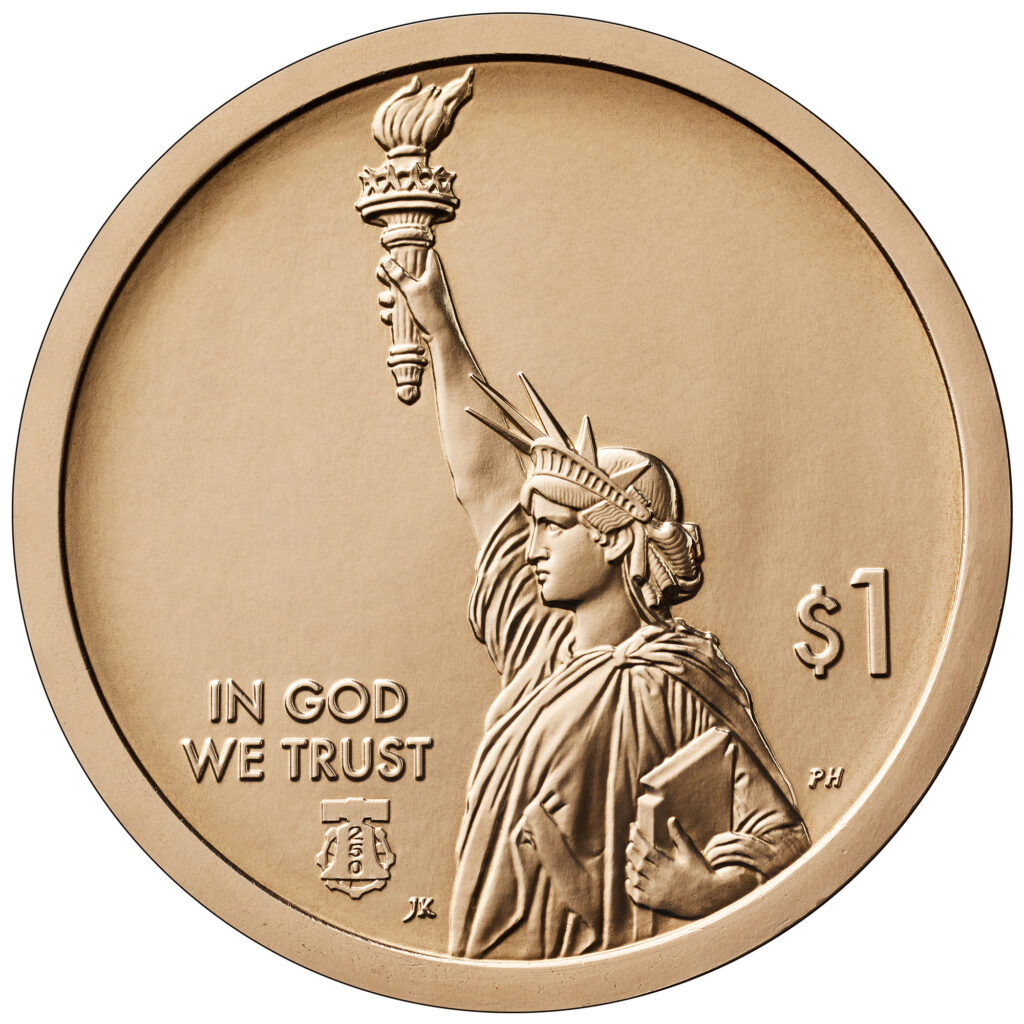
- Every coin shares the program’s common obverse — a dramatic Statue of Liberty in profile with the inscriptions “IN GOD WE TRUST” and “$1” and a stylized gear privy mark representing industry and innovation. On 2026 issues the gear also incorporates a Liberty Bell inscribed “250” to commemorate the Semiquincentennial of the nation’s founding. The year, the mint mark, and “E PLURIBUS UNUM” are incused on the edge (U.S. Mint, accessed 2026-10-13).
- The Mint set a mintage limit of 99,792 for the 2026 reverse proof coins, with no separate product limit for the set itself; no final mintage or sales total has been published (U.S. Mint, accessed 2026-10-13).
Key dates and varieties
- 2026-S Iowa — Dr. Norman Borlaug, “Father of the Green Revolution” (reverse proof, San Francisco)
- 2026-S Wisconsin — Cray-1 supercomputer (reverse proof, San Francisco)
- 2026-S California — Steve Jobs (reverse proof, San Francisco)
- 2026-S Minnesota — Mobile refrigeration (reverse proof, San Francisco)
- Set (item 26GC) on sale October 13, 2026, at noon EDT: $60.00; mintage limit 99,792; household order limit 2 (U.S. Mint)
Specifications
- Denomination: $1 (one dollar)
- Set contents: Four coins — the 2026 Iowa, Wisconsin, California, and Minnesota American Innovation dollars
- Finish: Reverse proof — frosted backgrounds, brilliant mirror-like devices (U.S. Mint)
- Composition: 6% zinc, 3.5% manganese, 2% nickel, balance copper (U.S. Mint)
- Weight: 8.100 g per coin (U.S. Mint)
- Diameter: 26.49 mm (1.043 in) (U.S. Mint)
- Edge: Lettered — incused “2026,” “S” mint mark, and “E PLURIBUS UNUM” (U.S. Mint)
- Mint mark: S (San Francisco)
- Mint facility: San Francisco Mint (U.S. Mint)
- Issue price: $60.00 per set (U.S. Mint)
- Item number: 26GC (U.S. Mint)
- Mintage limit: 99,792; no product limit listed (U.S. Mint)
- Obverse inscriptions: “IN GOD WE TRUST,” “$1” (U.S. Mint)
- Privy mark: Stylized gear; the 2026 version incorporates a Liberty Bell inscribed “250” (U.S. Mint)
Collector notes
- Confirm the finish before paying a premium: the same four state designs were also sold in ordinary uncirculated rolls and bags from Philadelphia and Denver — only the San Francisco coins in this set are reverse proofs.
- The mint mark is on the edge, not on either face: look for the incused “S” alongside the year and “E PLURIBUS UNUM.”
- 99,792 is the mintage limit announced at launch — not a final mintage, and not the number of sets sold.
- Every 2026 obverse carries the one-year gear-and-Liberty-Bell “250” privy for the Semiquincentennial; other years of the program use the plain gear privy.
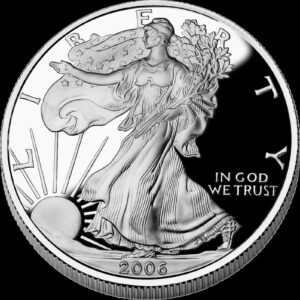
- The photo on this page is the Mint’s image of the shared 2026 obverse design in its uncirculated reference finish — the set’s reverse proof coins invert the contrast, with mirror-like devices against frosted fields.
Market check
Compare live listings for this coin on eBay:
Search eBay for 2026 American Innovation $1 Reverse Proof Set
As an eBay Partner, The Coin Wiki may earn from qualifying purchases.
Related Coins
Live on eBay
Live asking prices — not sale records.
 2026-S American Innovation $1 Coin Reverse Proof Set Of 4 Coins. #C2110$75.99View on eBay
 2026 S American Innovation REVERSE PROOF Set with 250 Privy OGP + BONUS$89.95View on eBay
 2026 S Reverse Proof American Innovation Set NGC PF 70 – PRESALE$359.99View on eBay
As an eBay Partner, The Coin Wiki may earn from qualifying purchases.
FREE DOWNLOAD
Before you spend that coin, check it.
The Pocket Change Key-Date Checklist covers the cents, nickels, dimes, quarters and halves still hiding in circulation — including the 1943 and 1983 errors worth five figures. One page to print, a lifetime of jars to check.