Specifications
- Denomination
- 2 pence
- Series
- Cartwheel twopence
- Designer
- Conrad Heinrich Kuchler
- Years of issue
- 1797
- Composition
- 100% Copper
- Weight
- 56.7 g
- Diameter
- 41 mm
- Edge
- Plain
- Mint marks
- SOHO
- Mintage
- 722160
- Key mintages
- Single-year issue, 1797 only. Mintage ~722,160 commonly cited (approximate figure). Struck at Matthew Boulton's Soho Mint, Birmingham — 'SOHO' appears below Britannia on the reverse.
Melt value: $0.80
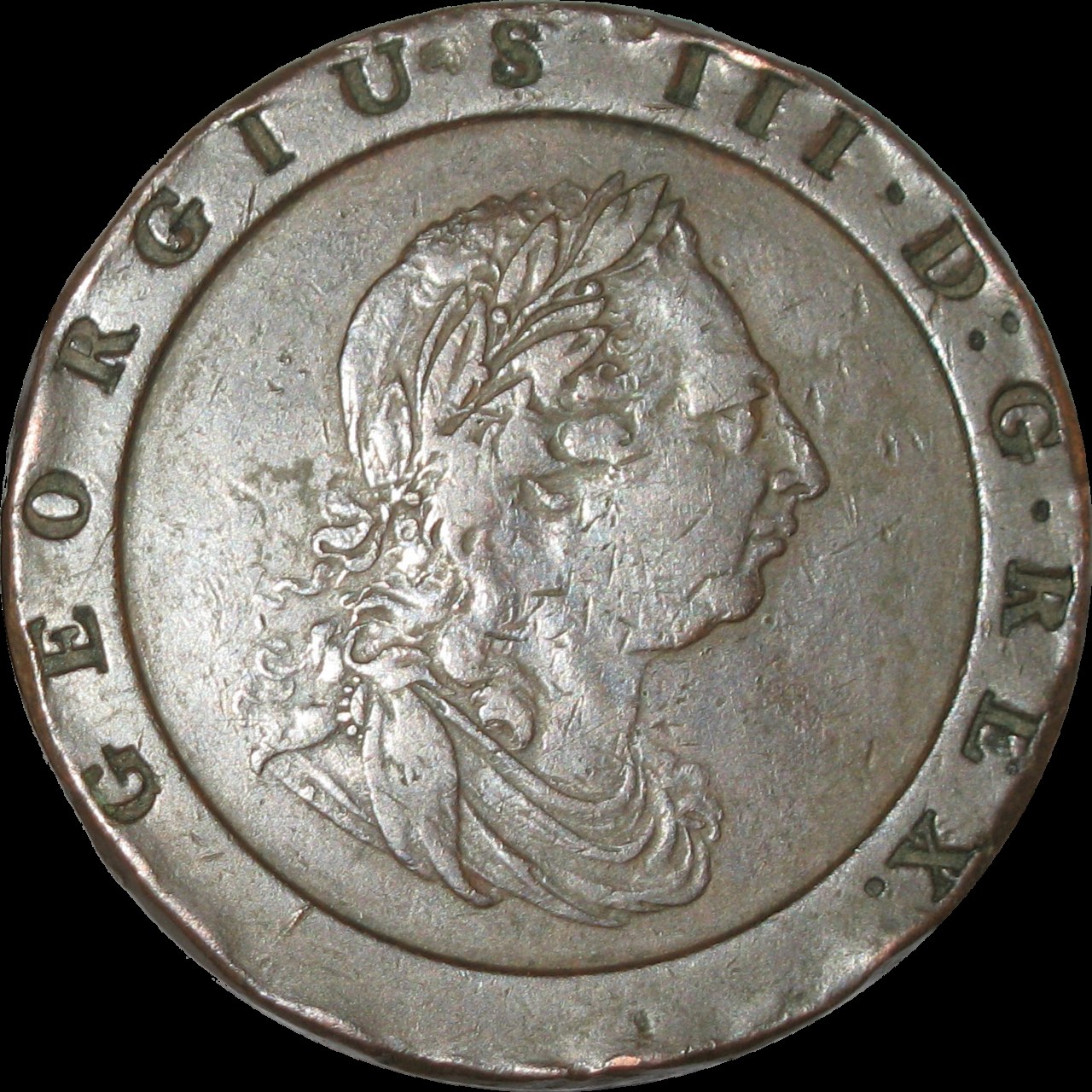
Two full ounces of copper — the largest, heaviest copper coin Britain ever put into circulation.
History
- In 1797 the government authorised Matthew Boulton to strike copper pennies and twopences at his Soho Mint in Birmingham to relieve a chronic shortage of small change (Wikipedia, accessed 2026-09-16).
- The law required a coin’s face value to match the value of its metal, so each twopence contained two pence worth of copper — a full 2 ounces (56.7 g) — making the coins far larger than the silver pennies they replaced (Wikipedia, accessed 2026-09-16).
- The coins’ great size and thick raised rim earned them the ‘cartwheel’ nickname (Wikipedia, accessed 2026-09-16).
- They were the first official British coins produced with steam-powered coining machinery (James Watt and William Murdoch’s presses at Soho) — the first official coins made by modern industrial methods (Chards; sovr.co.uk, accessed 2026-09-16).
- All cartwheel twopences bear the date 1797 — the only year the copper twopence was issued — and around 720,000 were minted (Wikipedia; Aberdeen eMuseum, accessed 2026-09-16).
- They were made legal tender for amounts of up to one shilling by a royal proclamation of 26 July 1797 (Numismatic News, accessed 2026-09-16).
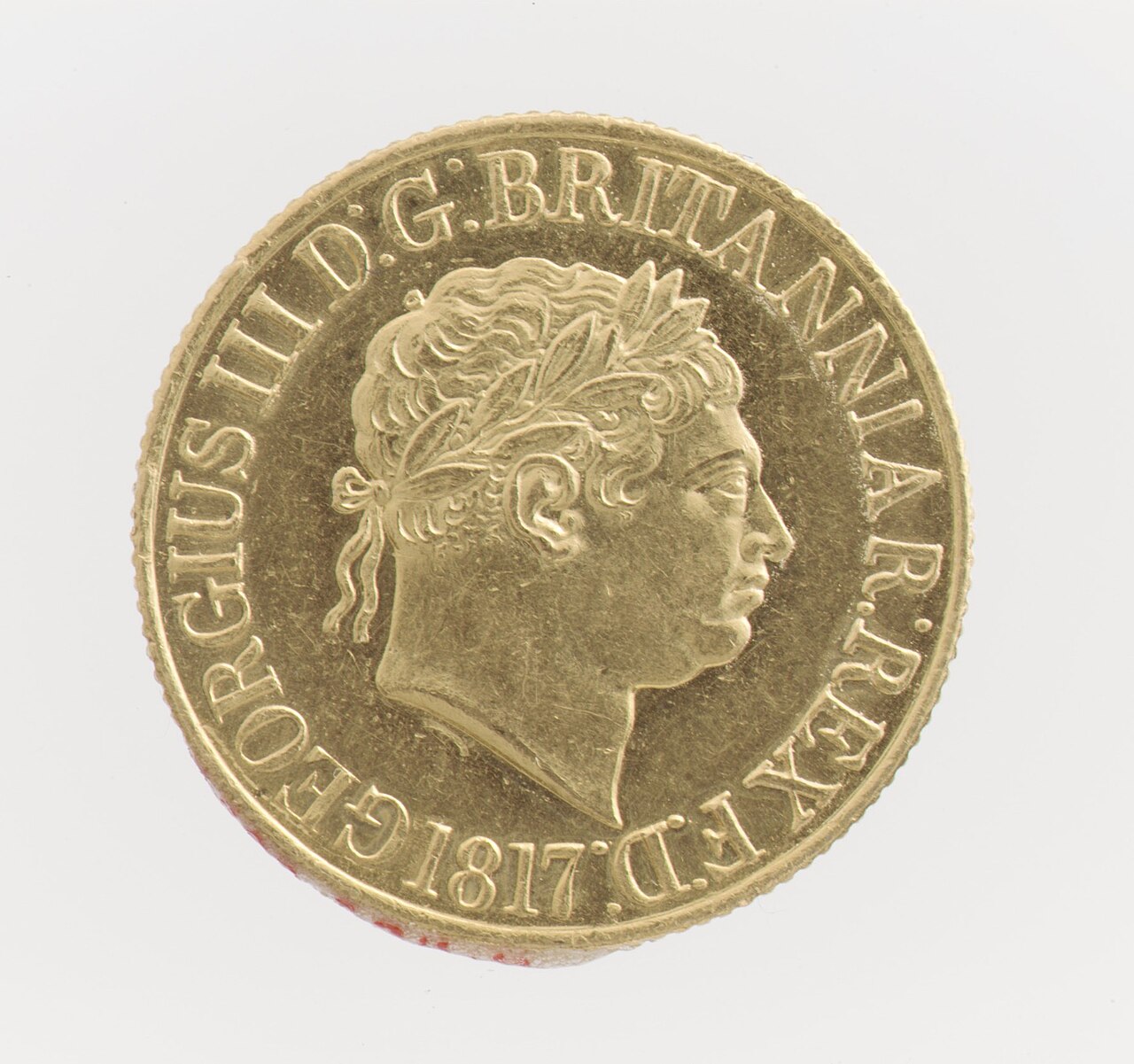
- Both sides were designed by the German engraver Conrad Heinrich Küchler, whose initial ‘K’ appears on the truncation; the legends are incuse (sunk into the broad rim), which Boulton believed harder for counterfeiters to copy, and ‘SOHO’ appears beside the shield (Wikipedia; Numismatic News; Chards, accessed 2026-09-16).
- The public disliked their weight and the twopence never returned in copper — the denomination was made redundant with the 1860 bronze coinage (CoinCraft; Wikipedia, accessed 2026-09-16).
Key dates and varieties
- 1797 — single-year issue; the only date for the copper twopence (Wikipedia, accessed 2026-09-16).
- Die varieties: 10 leaves versus 11 leaves in the laurel wreath on the obverse — the 11-leaf obverse catalogues slightly higher (Chards, accessed 2026-09-16).
Specifications
- composition
- designers
- diameter
- edge
- weight
Collector notes
- Soft pure copper nicks and scratches easily, and most examples show edge knocks from their weight; weigh the coin — genuine pieces run about 55.6–56.7 g (CoinCraft; sovr.co.uk, accessed 2026-09-16).
- Confirm diameter (41 mm) and the incuse legends on the raised rim — these are hard to fake convincingly (Silverhammer Coin Auctions, accessed 2026-09-16).
- This is a common, affordable type coin in low grades — don’t overpay for a worn example; pay the premium only for sharp legends and an even chocolate-brown patina (guidance).
- Never clean copper: abrasive cleaning destroys the patina and the incuse legends’ crispness (guidance).
Market check
Compare live listings for this coin on eBay:
Search eBay for 1797 Cartwheel Twopence
As an eBay Partner, The Coin Wiki may earn from qualifying purchases.