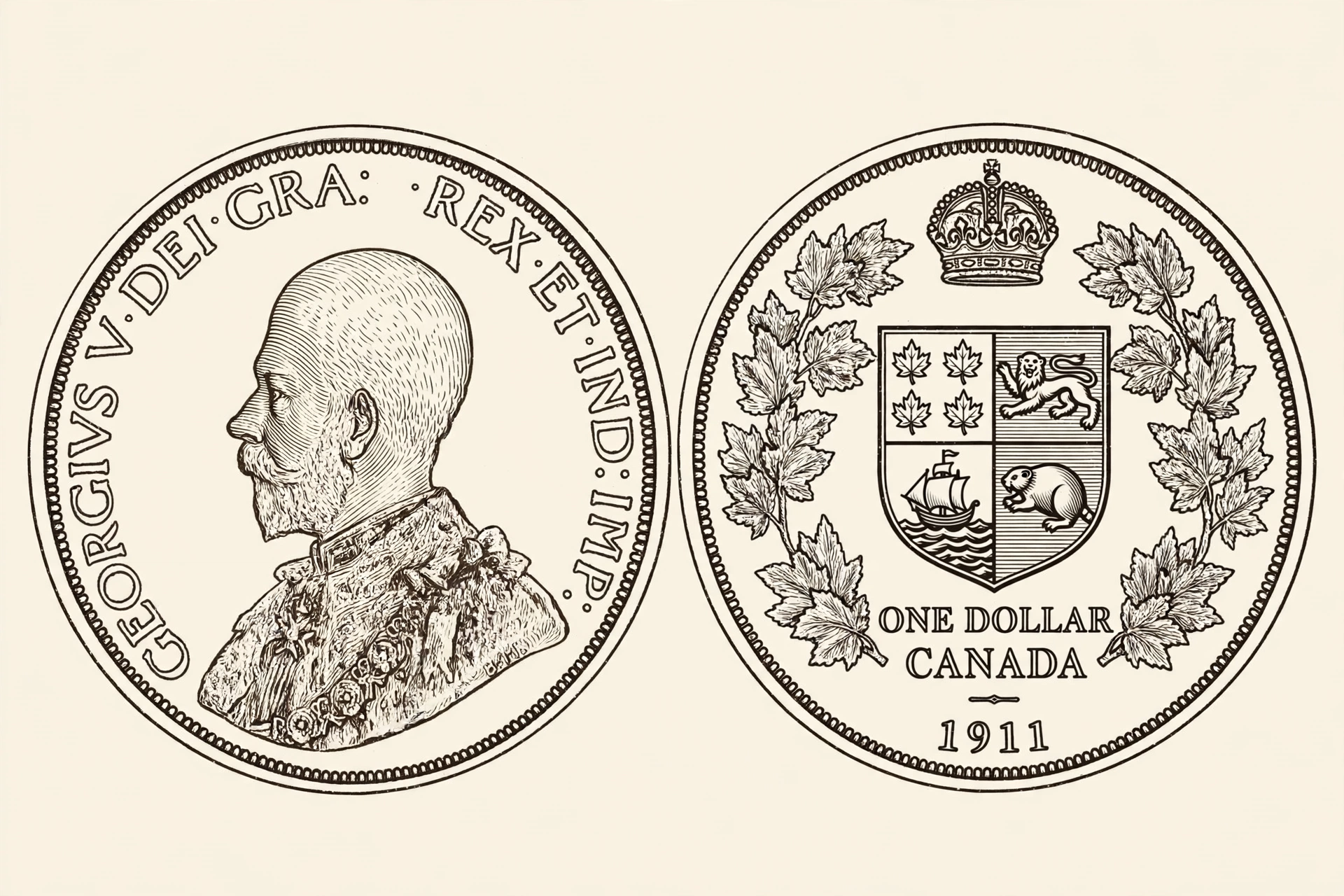
Specifications
- Denomination
- 5 cents
- Series
- 5 cents — George V
- Designer
- Edgar Bertram MacKennal (obverse); Leonard C. Wyon (reverse)
- Years of issue
- 1921
- Composition
- 80% Silver, 20% Copper
- Weight
- 1.1664 g
- Diameter
- 15.48 mm
- Edge
- Reeded
- KM
- KM-22a
- Mintage
- 2582495
Melt value: $1.94
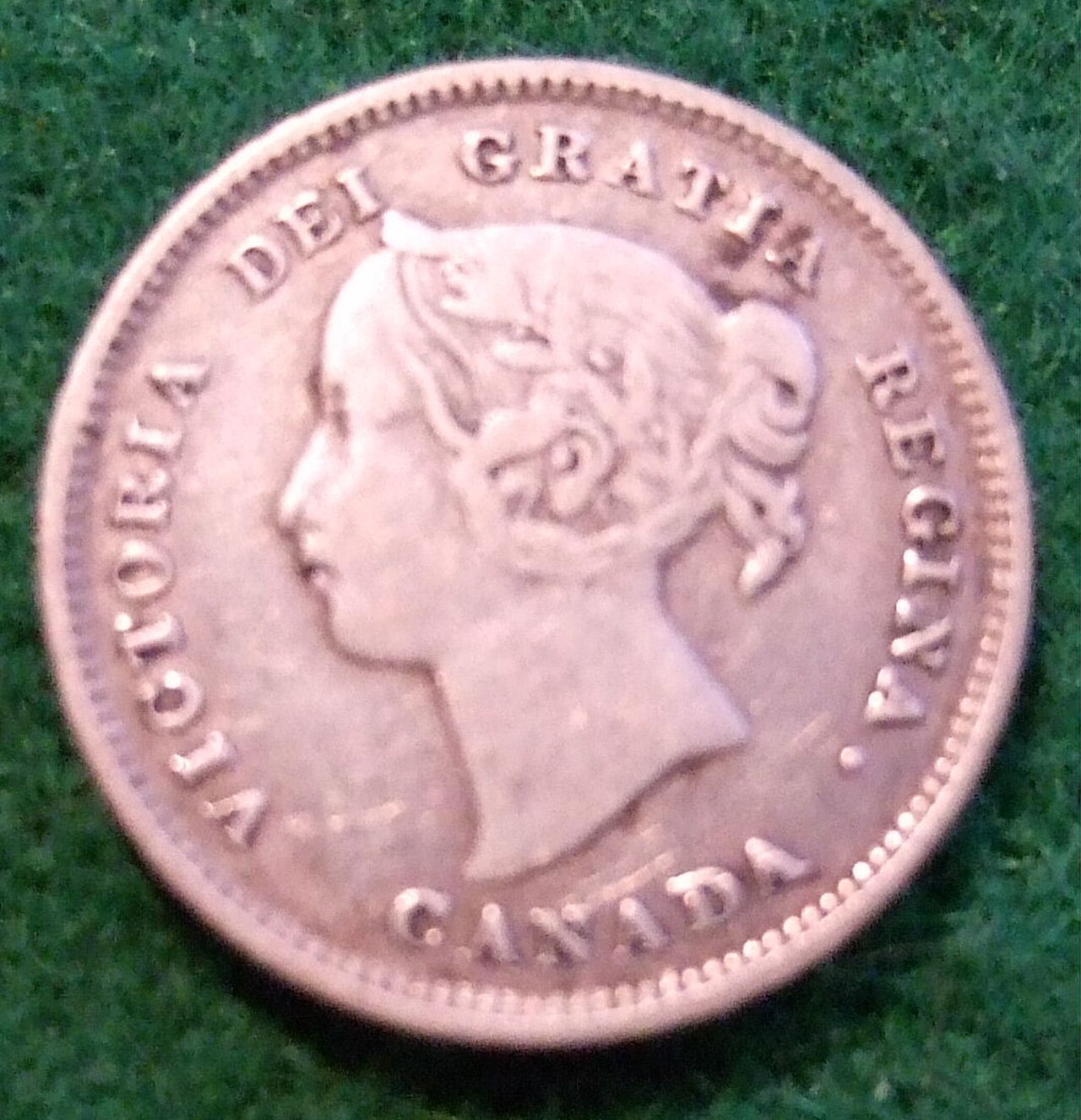
The last of Canada's tiny silver 'fishscale' 5-cent pieces — nearly the whole 1921 mintage was melted, leaving roughly 400 survivors.
History
- The 1921 silver 5-cent piece had an original mintage of 2,582,495 (Numismatic News, accessed 2026-09-16); about 2.5 million were struck before the decision to change the coinage was made (kpolsson.com chronology, accessed 2026-09-16).
- In May 1921 legislation amending the Currency Act authorized replacing the small silver coin with a larger pure-nickel 5-cent piece, rendering the silver ‘fishscales’ — so nicknamed for their thinness — obsolete (Numismatic News; kpolsson.com chronology, accessed 2026-09-16).
- Some 3,022,665 silver 5-cent coins on hand at the mint were melted down (kpolsson.com chronology, accessed 2026-09-16); the surviving 1921 pieces — estimated at about 400, obtained from mint sets or by visitors to the mint (kpolsson.com chronology, accessed 2026-09-16) — are put at roughly 460 known by Numismatic News (Numismatic News, accessed 2026-09-16).
- The 1921 issue was the last silver 5-cent piece: from 1922 until 1942 the Royal Canadian Mint struck 5-cent coins in pure nickel (Numismatic News, accessed 2026-09-16).
- Collector media has dubbed the 1921 5-cent the ‘Prince of Canadian Coins,’ pairing it with the 1921 50-cent ‘King of Canadian Coins’ as the two great rarities born of the 1921 recession (Coin Legacy documentary; Heritage Auctions, accessed 2026-09-16).
- The obverse carries Sir E. B. MacKennal’s portrait of George V and the reverse W. H. J. Blakemore’s crown-and-wreath design; the 1920–1921 issues were struck in .800 silver rather than the earlier .925 fineness (canadian-coins.ca, accessed 2026-09-16).
Specifications
- composition
- designers
- diameter
- edge
- weight
Collector notes
- Altered dates are the main fake: counterfeiters rework the ‘0’ of common 1920 5-cent pieces into a ‘1’ — inspect the date digits closely and confirm the 1.17 g weight and 15.5 mm diameter of a genuine piece (Coin Legacy documentary; canadian-coins.ca, accessed 2026-09-16).
- Certification counts could not be verified from a named source today; check PCGS and NGC population reports live before quoting rarity figures, and note published survival estimates range from about 400 to about 460 (kpolsson.com chronology; Numismatic News, accessed 2026-09-16).
- Most survivors are mint-state pieces from mint sets sold to visitors, so circulated examples are disproportionately scarce; a dealer price guide lists approximate CAD values from $5,500 in VG-8 up to $65,000 in MS65 (Numismatic News; canadian-coins.ca, accessed 2026-09-16) — verify against current auction results before transacting.
- Genuine pieces are .800 silver and non-magnetic at 1.17 g; off-weight, magnetic, or wrong-diameter pieces are red flags (canadian-coins.ca, accessed 2026-09-16).
- Do not clean a survivor: original surfaces drive the premium on a coin where most known examples are uncirculated (general collector guidance).
Market check
Compare live listings for this coin on eBay:
As an eBay Partner, The Coin Wiki may earn from qualifying purchases.