
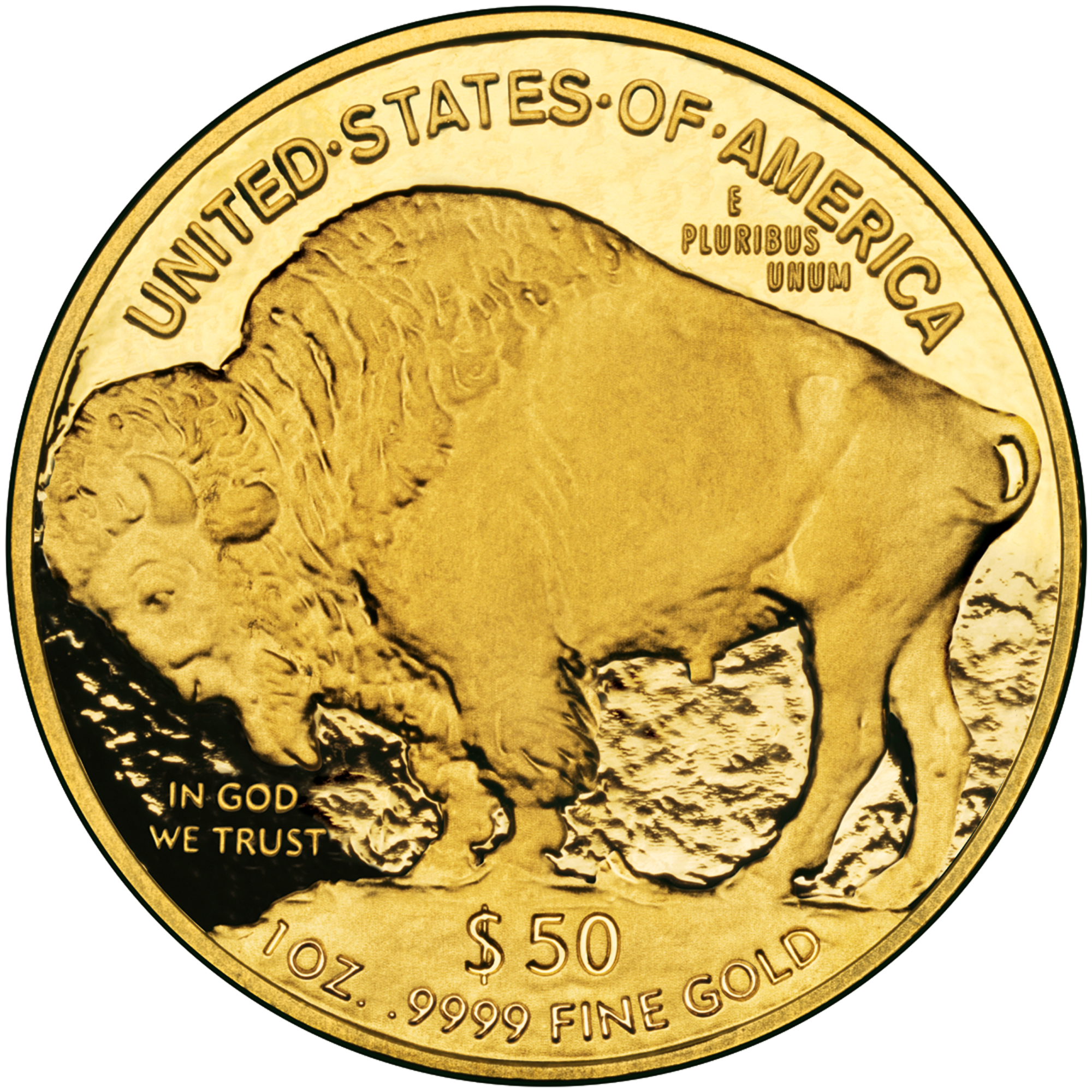
Same ounce of gold, different recipe: the Buffalo is 24-karat pure, the Eagle is 22-karat alloyed for durability. Both are 1 oz of gold — the right pick depends on what you value.
How it works
- The American Gold Buffalo (first struck 2006) is the only 24-karat gold coin the U.S. Mint has ever issued: .9999 fine, 1 troy oz of gold in a 31.1 g coin, with James Earle Fraser's 1913 Buffalo Nickel designs — the Native American portrait obverse and bison reverse (JM Bullion; goldsilver.com).
- The American Gold Eagle (first struck 1986) is 22-karat: 91.67% gold alloyed with 5.33% copper and 3% silver for hardness. It still contains exactly 1 troy oz of pure gold, but weighs more overall — 33.93 g — because of the alloy (JM Bullion; SD Bullion).
- Both are U.S. legal tender with a $50 face value, both are backed by the U.S. government for weight and purity, and both are eligible for precious-metals IRAs (SD Bullion; goldsilver.com).
Which should you buy
- Buy the Buffalo if purity matters. At .9999 fine with no alloy, the Buffalo meets the .9999 standard some institutional and international buyers require; the Eagle's full ounce of gold does not satisfy that standard without extra verification (goldsilver.com).
- Buy the Eagle if durability and flexibility matter. The 22-karat alloy resists scratching and handling wear far better than soft pure gold, and the Eagle comes in fractional sizes (1/2, 1/4, 1/10 oz) the Buffalo does not offer — the Buffalo is 1 oz only (JM Bullion; SD Bullion).
- On price: the Buffalo usually carries a slightly higher premium over spot than the Eagle, reflecting its purity — but not always. The Eagle's longer track record and broader dealer demand sometimes generate the higher premium (JM Bullion).
- The honest bottom line: both coins hold exactly one troy ounce of gold, so both track the gold price identically. The choice is about handling, purity requirements, and premium — not about how much gold you own (SD Bullion; goldsilver.com).
- New to bullion pricing? Start with the hub guide: Bullion Basics, then see How to Buy Gold Coins Without Getting Burned.
Key facts
- Gold content: 1 troy oz pure gold in both (JM Bullion).
- Purity: Buffalo .9999 fine (24-karat); Eagle .9167 fine (22-karat, 91.67% gold / 5.33% copper / 3% silver) (JM Bullion; SD Bullion).
- Total weight: Buffalo 31.1 g; Eagle 33.93 g (findbullionprices.com; SD Bullion).
- Diameter: Buffalo 32.7 mm (absolutebullion.com). Face value $50 both.
- Sizes: Buffalo 1 oz only; Eagle 1, 1/2, 1/4, 1/10 oz (SD Bullion).
- First year: Eagle 1986; Buffalo 2006 (SD Bullion).
Market check
Compare live listings for both coins on eBay:
Search eBay for American Gold Buffalo
As an eBay Partner, The Coin Wiki may earn from qualifying purchases.
FREE DOWNLOAD
Before you spend that coin, check it.
The Pocket Change Key-Date Checklist covers the cents, nickels, dimes, quarters and halves still hiding in circulation — including the 1943 and 1983 errors worth five figures. One page to print, a lifetime of jars to check.