
Russia
Russian coinage falls into three eras collectors must learn to separate. Imperial Russia issued silver roubles and portrait gold of the tsars, ending with Nicholas II’s gold after the 1897 gold-standard reform. The Soviet era (1922–1991) replaced portrait coinage with workers, stars, and the famous 1923 gold chervonets. The modern Russian Federation (redenominated 1 January 1998 at 1000:1) issues kopek and rouble coins in base metals.
Coins of Russia
Every coin entry in this wiki — one tap to the full page.
Showing 9 of 9
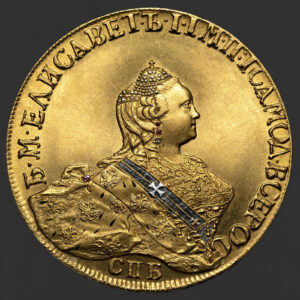 1755 20 Roubles (Pattern)AI-generated illustration — not a photograph of a genuine coin. Elizabeth gold pattern 'double imperial' ·…View coin ›
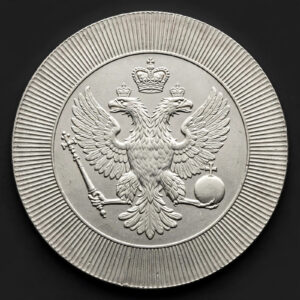 1836 12 Roubles PlatinumAI-generated illustration — not a photograph of a genuine coin. Nicholas I platinum 12-rouble proof ·…View coin ›
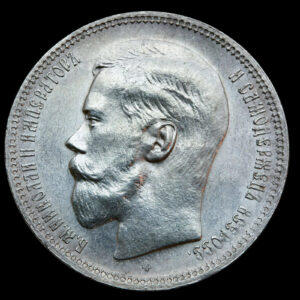 1896 Coronation RoubleAI-generated illustration — not a photograph of a genuine coin. Nicholas II coronation commemorative rouble ·…View coin ›
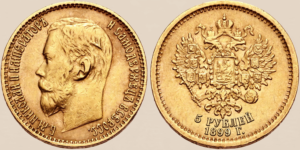 1899 5 Roubles Gold (Nicholas II)AI-generated illustration (no usable free real photo with verifiable Commons file-page licensing located). Design reference: Britannia…View coin ›
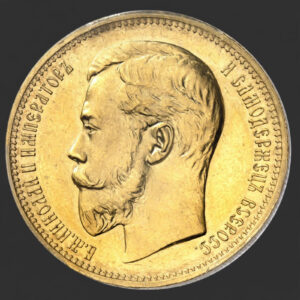 1902 37 Roubles 50 Kopeks (100 Francs)AI-generated illustration — not a photograph of a genuine coin. Nicholas II presentation gold · 37½…View coin ›
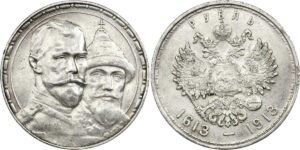 1913 Romanov Roublecgb, CC BY-SA 3.0, via Wikimedia Commons 300th anniversary of the Romanov dynasty · jugate busts…View coin ›
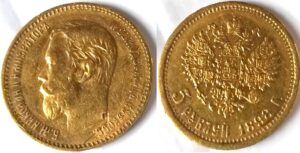 Imperial Russian 5 Roubles GoldNicholas II (1897–1911)View coin ›
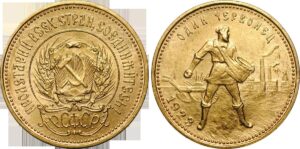 Soviet Gold Chervonets “Sower” (1923)The 1923 gold chervonets — the "Sower" — is the most famous Soviet gold coin: a…View coin ›
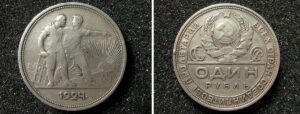 Soviet Silver Rouble 1924The 1924 silver rouble is the first great silver coin of the USSR — a worker…View coin ›
History & collecting
The story behind the coins, one tap away.
- Issued: 1897–1911 at the St. Petersburg Mint, after the 1897 monetary reform put the rouble on the gold standard; the 5- and 10-rouble gold coins were introduced in 1886.
- Composition: .900 gold, 4.3 g, 18 mm, ~0.1245 oz AGW.
- Key dates: 1906 and 1907 are the famous rarities of the type.
- Notable varieties: obverse shows the left-facing Nicholas II portrait with the Cyrillic legend “By the Grace of God, Nicholas II, Emperor and Autocrat of All the Russias”; reverse shows the crowned double-headed eagle with the St. George shield; the 10-rouble gold of the same reign is exactly double the gold content (~0.249 oz AGW).
Value: Check live sold listings on the linked guide before buying or pricing. For metal value, use the melt calculator.
- Issued: 1924, Leningrad (Petrograd) Mint (KM 90.1 / Y# 90.1) — the first great silver coin of the USSR: a worker guiding a peasant toward a factory sunrise on one side, the Soviet state emblem with the “Workers of the world, unite!” motto on the other.
- Composition: .900 silver, 20 g, 33.5 mm — 18 g pure silver per the edge inscription (4 zolotniks, 21 dolyas).
- Key dates: 1924 only in this entry; common in worn grades but scarce in high grade.
- Notable varieties: edge inscription “ЧИСТОГО СЕРЕБРА 18 ГРАММ (4 З. 21 Д.)” plus mintmaster initials П•Л (Pyotr Latyshev).
- Mintage highlights: published mintage ~12,998,000 (Standard Catalog of World Coins, 46th ed.).
Value: Check live sold listings on the linked guide before buying or pricing. For metal value, use the melt calculator.
- Issued: all dated 1923 — issued by the RSFSR under the 1922–24 monetary reform, designed by chief Petrograd mint medalist A. F. Vasyutinskiy (the sower modeled from I. D. Shadr’s sculpture), minted mainly for Soviet foreign-trade operations during NEP.
- Composition: 8.6 g, .900 fine gold — matched the pre-revolutionary Nicholas II 10-rouble specs exactly.
- Key dates: 1923 originals; official restrikes dated 1975–1982.
- Notable varieties: restrikes of the chervonets were made in the later Soviet era — know whether you’re holding an original 1923 or a restrike; a peasant sowing grain against a factory skyline.
Value: Check live sold listings on the linked guide before buying or pricing. For metal value, use the melt calculator.
- Issued: 1998–present — on 1 January 1998 the rouble was redenominated at 1000:1 (Yeltsin’s decree of 4 August 1997); old coins ceased to be legal tender.
- Key dates: 1998 first issues — kopek coins with St. George (1, 5, 10, 50 kopeks) and rouble coins with the Bank of Russia double-eagle emblem (1, 2, 5 roubles).
- Notable varieties: modern bimetallic 10-rouble commemorative series is a collector pursuit (not yet covered in this wiki).
Value: Compare authenticated sold listings before buying or pricing.
Russia has no modern flagship bullion series covered in this wiki. The gold anchors are the Imperial Nicholas II gold (5 and 10 roubles) and the 1923 gold chervonets, which trade on gold content plus numismatic premium.
Value: Check live sold listings on the linked guides before buying or pricing. For metal value, use the melt calculator.
Values move; always check live sold listings on the linked guides. Key dates and high-value pieces require authentication.
Values move — always check live sold listings on the linked entries before buying or selling; heavy fake traffic makes authentication matter more here than almost anywhere else in world coins — certified examples (PCGS/NGC) are the safe route.
Europe Red Book v2 research chapter, published September 15, 2026. Values are intentionally excluded; use authenticated sold-market evidence.
Real prices come from real sales. Check what Russia coins are actually selling for right now.
Live eBay listingsSold eBay listingsSee live Russia dealsMatching checklists & toolsAs an eBay Partner, The Coin Wiki may earn from qualifying purchases.
FREE DOWNLOAD
Before you spend that coin, check it.
The Pocket Change Key-Date Checklist covers the cents, nickels, dimes, quarters and halves still hiding in circulation — including the 1943 and 1983 errors worth five figures. One page to print, a lifetime of jars to check.