
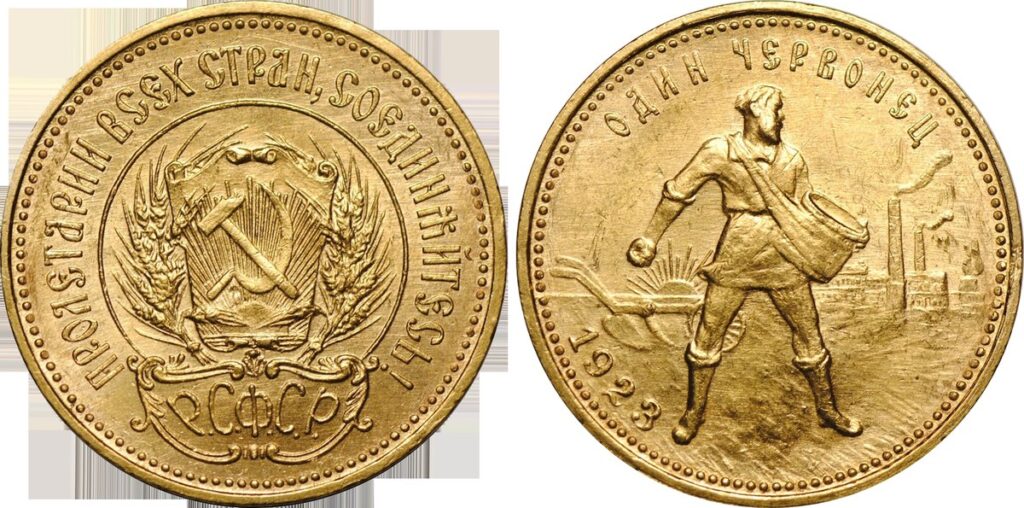
The 1923 gold chervonets — the “Sower” — is the most famous Soviet gold coin: a peasant sowing grain against a factory skyline, issued by the RSFSR under the 1922–24 monetary reform to back trade with hard currency. Originals are dated 1923; official Soviet restrikes were dated 1975–1982, so buyers must know which era they’re holding. The entry covers the specs, the NEP context, and the restrike story.
Key facts
- 8.6 g, .900 fine gold — matched the pre-revolutionary Nicholas II 10-rouble specs exactly
- Originals dated 1923 (official restrikes dated 1975–1982); decision to issue taken October 1922; designed by chief Petrograd mint medalist A. F. Vasyutinskiy; sower modeled from I. D. Shadr’s sculpture
- Face side: RSFSR arms; minted mainly for Soviet foreign-trade operations during NEP
- Western refusal of Soviet-symbol coins led the USSR to also strike Nicholas II portrait gold for foreign payments
- Restrikes of the chervonets were made 1975–1982
Market check
As an eBay Partner, The Coin Wiki may earn from qualifying purchases.
FREE DOWNLOAD
Before you spend that coin, check it.
The Pocket Change Key-Date Checklist covers the cents, nickels, dimes, quarters and halves still hiding in circulation — including the 1943 and 1983 errors worth five figures. One page to print, a lifetime of jars to check.