
Specifications
- Denomination
- 1 dollar (mule with 10-cent obverse)
- Series
- Decimal one dollar — mob of roos (error)
- Designer
- Stuart Devlin (reverse); 2000 ten-cent obverse die
- Years of issue
- 2000
- Composition
- 92% Copper, 2% Nickel, 6% Other
- Weight
- 9 g
- Diameter
- 25 mm
- Edge
- Interrupted reeding
- Mintage
- 6000
- Key mintages
- Estimated ~6,000 struck (NAA journal); Downies estimate 400–6,000. True mintage unknown; all examples entered circulation.
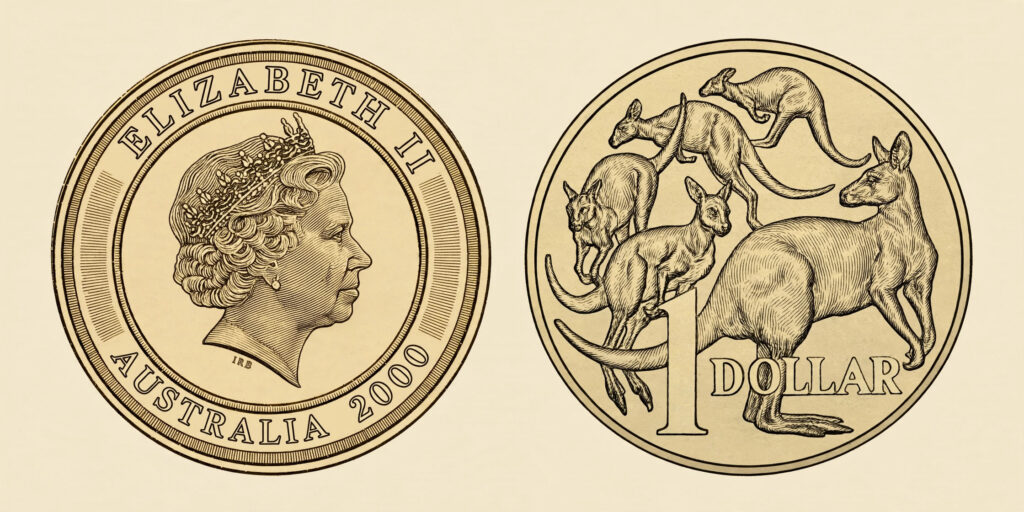
The $1 coin struck with a 10-cent obverse — Australia’s most famous modern mint error, still hiding in pocket change.
History
- A ‘mule’ is created when the dies used to mint a coin were never intended to be used together; the 2000 $1/10c mule is the most famous Australian example (Journal of the Numismatic Association of Australia — Harris & Nemtsas, accessed 2026-09-16).
- The coin was struck on a regular aluminium-bronze dollar planchet with the familiar ‘mob of roos’ reverse, but the obverse was struck with an Australian 10-cent obverse die — slightly smaller than the dollar die — producing the key identifier: a thick, obvious double rim around the Queen’s portrait (JNAA — Harris & Nemtsas, accessed 2026-09-16).
- The estimated mintage is 6,000 coins (JNAA); Downies estimates 400–6,000, and the true mintage is unknown — every example known was found in circulation (JNAA; coinsandaustralia.com, accessed 2026-09-16).
- The mules surfaced first in Perth, where keen ‘noodlers’ found them in their hundreds over many weeks at the Burswood Casino; they are still found in change today (JNAA — Harris & Nemtsas, accessed 2026-09-16).
- According to an anonymous Mint employee, the Royal Australian Mint wanted to destroy all the mules when the mistake was discovered during production (coinsandaustralia.com, accessed 2026-09-16).
- Because the smaller 10c die was used, the obverse strike is often off-centre, shifting the portrait toward the top of the coin; well-centred examples tend to fetch more (numismaticnews.net, accessed 2026-09-16).
- The mule’s fame has spawned counterfeits on eBay: fakes are perfectly centred with a narrow double rim and coarse ‘spaghetti-like’ hair detail, while genuine mules show fine detail and usually an off-centre strike (The Australian Coin Collecting Blog, accessed 2026-09-16).
- For context, the standard 2000 $1 had a circulation mintage of 7,592,000 coins per the Royal Australian Mint’s 2000–01 annual report (onlinecoin.club, accessed 2026-09-16).
Key dates and varieties
- 2000 mule ($1/10c) — est. ~6,000 struck (JNAA); Downies estimate 400–6,000; true mintage unknown (coinsandaustralia.com)
- 2000 standard $1 — 7,592,000 circulation coins dated 2000 (RAM annual report via onlinecoin.club)
- Off-centre mules — the double rim is equally off-centre; well-centred examples fetch more (numismaticnews.net)
Specifications
- Composition: Aluminium bronze: 92% copper, 6% aluminium, 2% nickel (CoinNews via Royal Australian Mint; coinsandaustralia.com)
- Designers: Reverse: Stuart Devlin (mob of roos); obverse: the 2000 10-cent obverse die (JNAA — Harris & Nemtsas)
- Diameter: 25 mm (coinsandaustralia.com; onlinecoin.club)
- Edge: Milled interrupted, in seven sections (onlinecoin.club)
- Weight: 9 g (coinsandaustralia.com; onlinecoin.club)
Collector notes
- The thick double rim on the obverse is the diagnostic — but compare it against known genuine examples, because fakes exaggerate or narrow it.
- Genuine mules are usually off-centre on the obverse; a perfectly centred ‘mint state’ example is a red flag for a counterfeit (The Australian Coin Collecting Blog).
- Check the hair detail: genuine mules have fine detail; fakes show coarse ‘spaghetti-like’ hair (The Australian Coin Collecting Blog).
- Buy certified (PCGS/NGC) — a dealer report citing PCGS data noted 293 mules graded across all grades with only five in MS64 and none finer, so mint-state examples are genuinely scarce (Drake Sterling).
- Verify the edge: the genuine $1 edge is interrupted milling in seven sections (onlinecoin.club).
Market check
Recent eBay sales
The wiki started tracking eBay sales for this coin on September 26, 2026. Confirmed sales will appear here as our monitor observes them — check back in a few days.
Compare live listings for this coin on eBay:
Search eBay for 2000 Mule Dollar
As an eBay Partner, The Coin Wiki may earn from qualifying purchases.
Related Coins
Live on eBay
Live asking prices — not sale records.
 2000 Sacagawea Dollar Washington Quarter Mule Error Private Issue 1oz F Silver$225.00View on eBay
 2000 One Dollar Mule with Ten Cent Obverse – PCGS XF45$410.60View on eBay
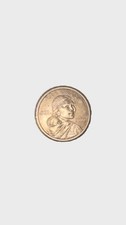 2000 p Sacagawea one dollar coin mule w/state 25c obverse$300.00View on eBay
As an eBay Partner, The Coin Wiki may earn from qualifying purchases.
FREE DOWNLOAD
Before you spend that coin, check it.
The Pocket Change Key-Date Checklist covers the cents, nickels, dimes, quarters and halves still hiding in circulation — including the 1943 and 1983 errors worth five figures. One page to print, a lifetime of jars to check.