
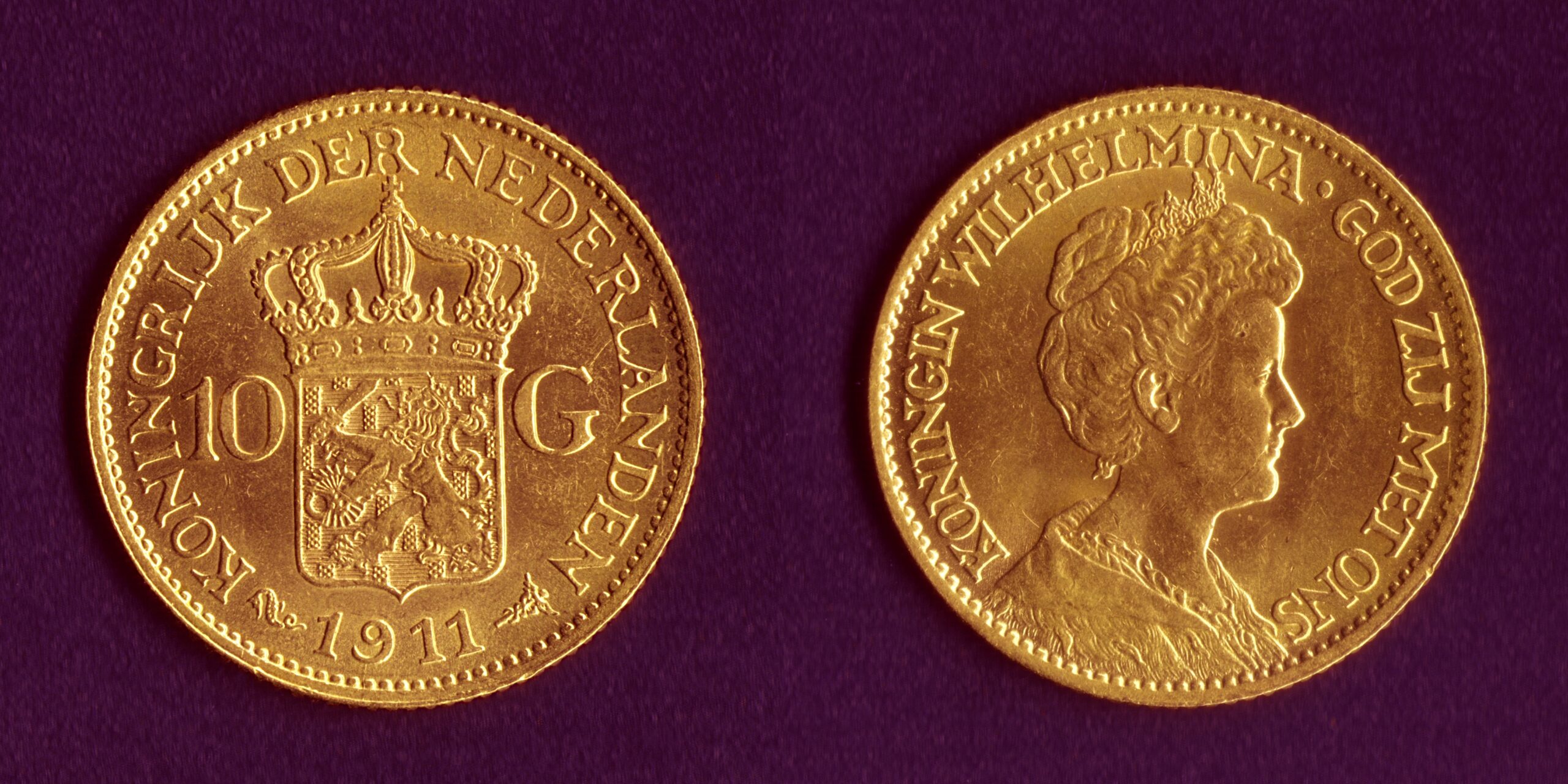
Specifications
- Denomination
- 10 gulden
- Series
- Dutch Gold Guilders — Wilhelmina
- Designer
- Pier Pander (obverse portrait)
- Composition
- 90% Gold, 10% Copper
- Weight
- 6.729 g
- Diameter
- 22.5 mm
- Edge
- Reeded
- KM
- KM#149
- Key mintages
- Full-series mintage total not verified; 1892: 61 struck (nl.wiki).
Melt value: $688.09
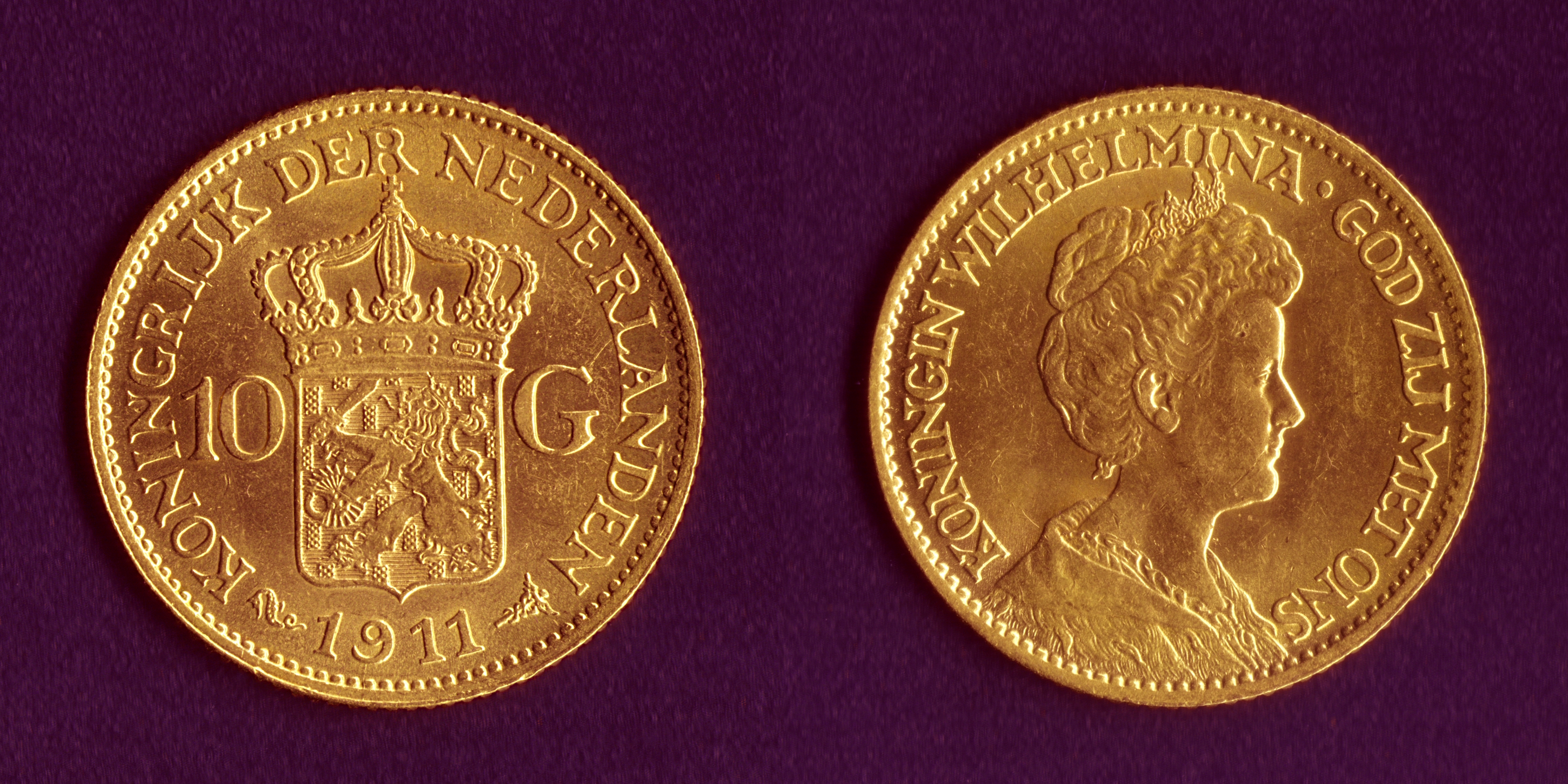
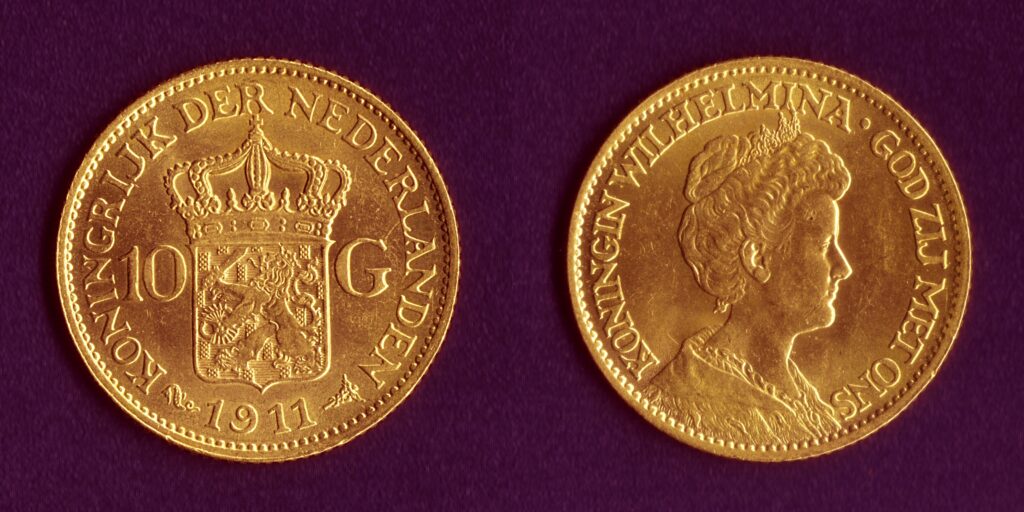
The Dutch 10-guilder piece: 6.729 g of .900 fine gold holding 0.1947 oz pure — the tiny 1892 first issue and the 1898 are the dates to know.
History
- The gold 10-guilder piece was struck from 1818 to 1933 with interruptions, with its last regular issues in 1932–1933 (nl.wikipedia).
- Under Queen Wilhelmina the coin was struck in 1892, 1895, 1897, 1898, 1911–1913, 1917, 1925–1927, and 1932–1933; the portrait was updated several times, with the 'long hair' portrait of the adult queen appearing from 1898 (nl.wikipedia).
- The obverse portrait was designed by the sculptor Pier Pander (collectors-society.com); the 1898 issue — the first with the long-hair portrait — is considered the most attractive issue in the series (nl.wikipedia).
- The coins were struck at the Utrecht mint, identified by the caduceus mint mark, with additional privy marks for the individual mint masters (colnect.com).
What is it worth
- Melt value = 0.1947 × the current gold spot price per troy ounce (Provident Metals; nl.wikipedia). Common dates — the heavily struck 1920s issues — trade near melt as bullion (nl.wikipedia).
- The 1892 issue, the smallest of the series with only 61 pieces struck, is the rarest; the 1898 with the long-hair portrait is the most sought-after of the Wilhelmina type (nl.wikipedia).
What drives the premium
- Value drivers: 0.1947 troy oz of pure gold sets the floor; date rarity (1892, 1898), the portrait type (long hair vs. short hair), and original mint luster set the premium (nl.wikipedia).
How to identify the valuable variety
- Check the date: 1892 (61 struck) is the series key, and 1898 is the prized long-hair-portrait issue (nl.wikipedia).
- Check the portrait: the long-haired adult Wilhelmina portrait of 1898 commands a premium over the earlier young-queen types (nl.wikipedia).
- Confirm the Utrecht caduceus mint mark and the weight of 6.729 g at 22.5 mm — the standard for the Wilhelmina type, KM#149 (colnect.com; cashconverters.com).
Specifications
- Composition: 900/1000 gold, 100/1000 copper (.900 fine) (colnect.com)
- Weight: 6.729 g (Provident Metals; colnect.com)
- Gold content: 0.1947 troy oz AGW — 6.729 g × 0.900 (nl.wikipedia); melt value = 0.1947 × the current gold spot price
- Diameter: 22.5 mm (Provident Metals; colnect.com)
- Edge: Reeded (coinscatalog.net)
- Designer: Pier Pander (obverse portrait) (collectors-society.com; colnect.com)
- Mints: Utrecht — caduceus mint mark, with mint-master privy marks (colnect.com)
- Years: 1818–1933 with gaps; Wilhelmina type struck 1892, 1895, 1897, 1898, 1911–1913, 1917, 1925–1927, 1932–1933 (nl.wikipedia)
Collector notes
- KM#149 covers the 1911–1917 Wilhelmina type (coinscatalog.net; cashconverters.com); earlier monarchs and portrait types carry their own catalog numbers.
- See also the World Gold Coins hub for more classic gold issues.
Market check
Compare live listings for this coin on eBay:
Search eBay for Dutch 10 Gulden Gold
As an eBay Partner, The Coin Wiki may earn from qualifying purchases.
FREE DOWNLOAD
Before you spend that coin, check it.
The Pocket Change Key-Date Checklist covers the cents, nickels, dimes, quarters and halves still hiding in circulation — including the 1943 and 1983 errors worth five figures. One page to print, a lifetime of jars to check.