Specifications
- Denomination
- 1 cent
- Series
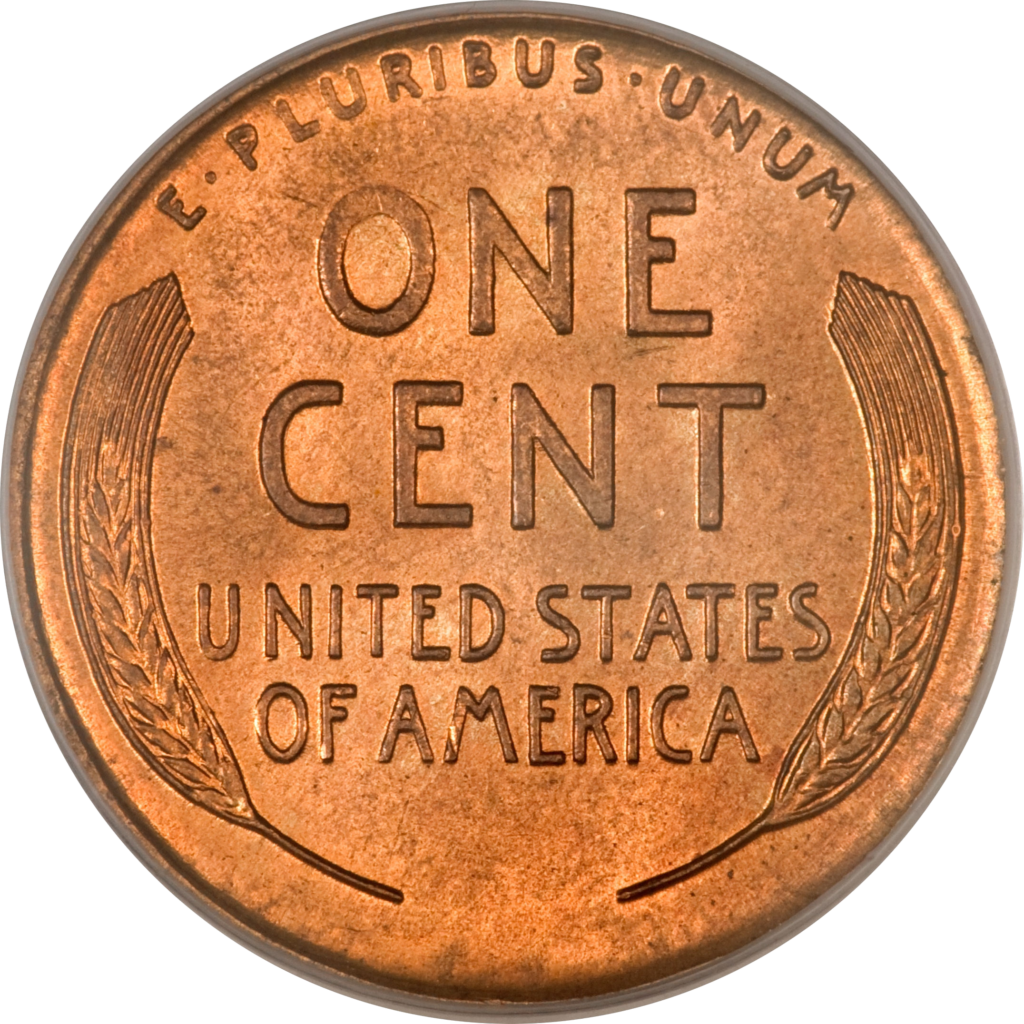
- Lincoln cent — Wheat reverse
- Designer
- Victor David Brenner
- Years of issue
- 1909-1958
- Weight
- 3.11 g
- Diameter
- 19 mm
- Edge
- Plain
- Key mintages
- Keys include the 1931-S at 866,000 circulation strikes (CoinWeek)
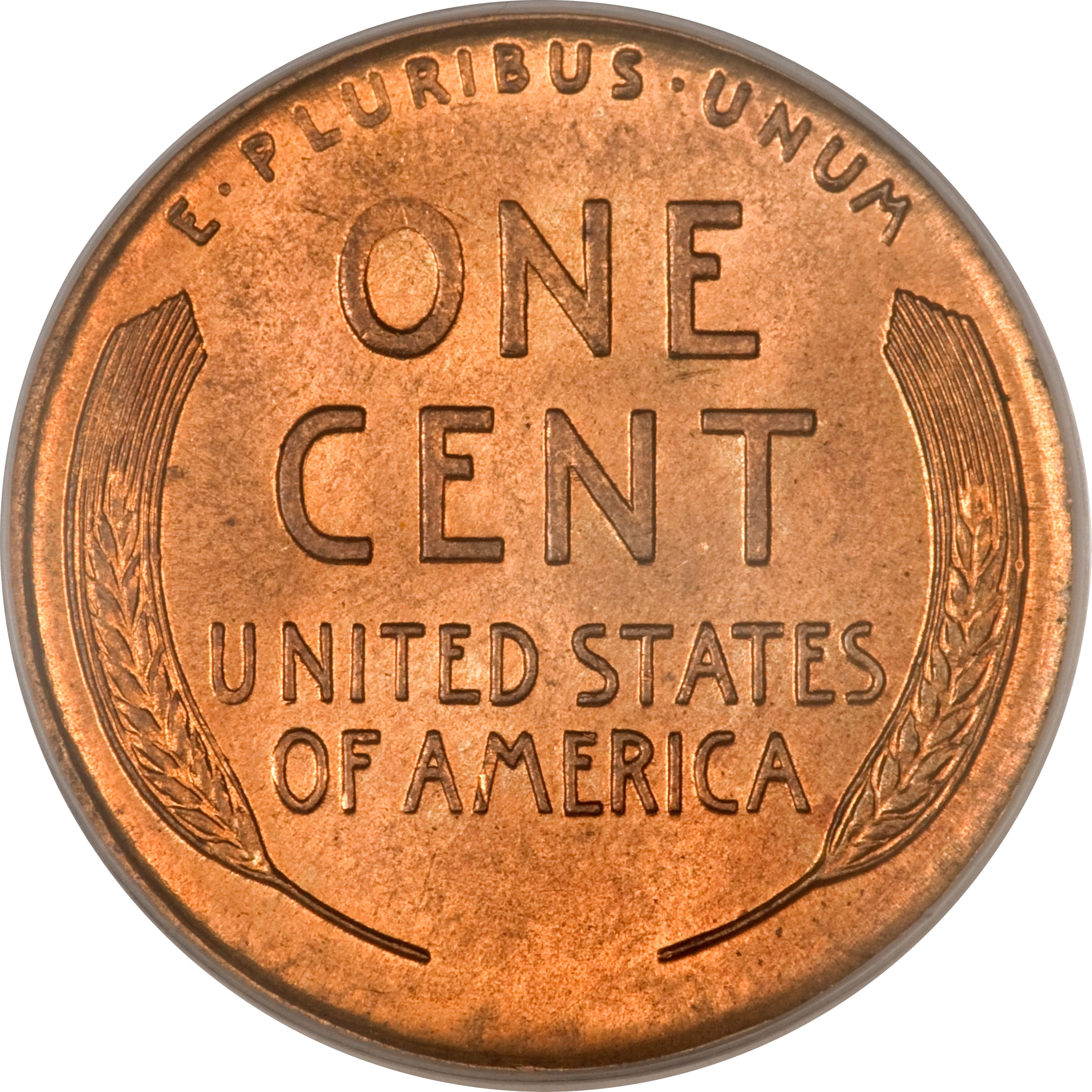
Most wheat cents are worth face value — the money is in keys like the 1909-S VDB and 1914-D, doubled dies, and Red uncirculated survivors.
History
- The Lincoln wheat cent was struck from 1909 to 1958 and was the first circulating U.S. coin to carry the likeness of a real person — Abraham Lincoln, issued for the centenary of his birth (CoinWeek). Brenner’s V.D.B. initials first appeared prominently on the reverse, were removed after public controversy, and were reinstated in small form on Lincoln’s shoulder in 1918; the 1909 V.D.B. and 1909-S V.D.B. are collected as a separate type (CoinWeek).
- Wartime changed the metal: 1943 cents were struck on zinc-coated steel because copper was a critical war material, inadvertently creating the 1943 bronze and 1944 steel off-metal rarities, while 1944-46 cents were made from reused shell cases whose bronze was nearly identical to the original alloy minus the tin (CoinWeek).
- Collector interest took off in the early 1930s with publicity for the low-mintage 1931-S and the arrival of coin boards (CoinWeek).
What is it worth
- Higher-priced issues include the 1914-D, the 1917 and 1936 doubled dies, the 1922 No D, and the 1955 and 1958 doubled dies, along with pre-1936 Red cents graded MS65 and finer (CoinWeek).
- Color matters: cents are designated Brown, Red-Brown, or Red, and Red examples of dates through the mid-1930s command significant premiums (CoinWeek).
- The unique 1943-D bronze cent would be worth at least one million dollars if sold at public auction (CoinWeek).
What drives the premium
- 1909-S VDB — the key to the series (CoinWeek).
- 1914-D — low-mintage key date (CoinWeek).
- 1922 No D — Denver die with the mintmark missing (CoinWeek).
- 1931-S — 866,000 circulation strikes (CoinWeek).
- 1943 bronze / 1944 steel — wartime off-metal rarities (CoinWeek).
- 1955 Doubled Die Obverse — the famous doubled die (CoinWeek).
- Low mintages drive keys such as the 1931-S at 866,000 circulation strikes (CoinWeek).
How to identify the valuable variety
- Check the date and the mintmark below the date — Philadelphia struck no-mintmark cents, Denver used D, and San Francisco used S (CoinWeek).
- The issues collectors prize most include the 1909-S V.D.B., 1914-D, 1917 Doubled Die Obverse, 1922 No D, 1936 Doubled Die Obverse, 1943 bronze, 1944 steel, 1955 Doubled Die Obverse, and 1958 Doubled Die Obverse (CoinWeek).
Specifications
- Composition: Bronze: 95% copper, 5% tin and zinc, 1909–42 and 1947–58 (CoinWeek)
- Weight: 3.11 g (CoinWeek)
- Diameter: 19.0 mm (CoinWeek)
- Edge: Plain
- Alignment: Not verified in consulted references
- Designers: Victor David Brenner (CoinWeek)
- Mint: Philadelphia (no mintmark), Denver (‘D’), San Francisco (‘S’) (CoinWeek)
Collector notes
- The 1909 V.D.B. and 1909-S V.D.B. are collected as a separate type (CoinWeek).
Market check
Compare live listings for this coin on eBay:
Search eBay for Wheat Pennies Worth Money
As an eBay Partner, The Coin Wiki may earn from qualifying purchases.