Specifications
- Denomination
- multiple
- Series
- Mint error types
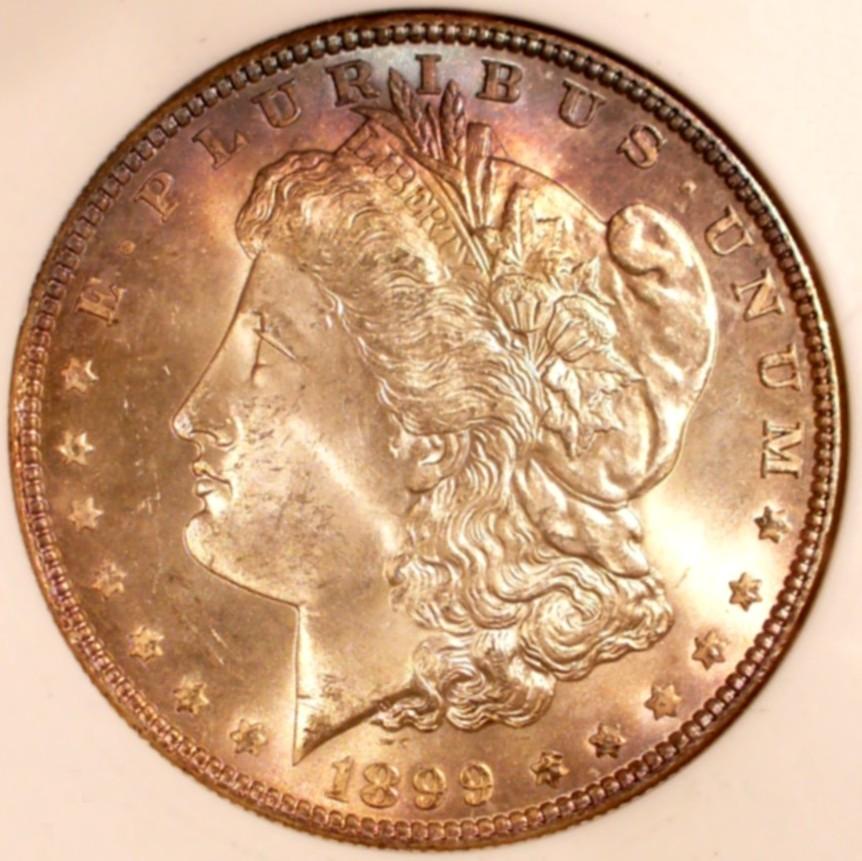
A struck-through coin has part of its design missing or smudged because a foreign object — grease, cloth, wire, even a staple — got between the die and the planchet at the moment of strike. PCGS calls it the most common mint error type; ordinary examples sell for $1–$50, while a retained object still stuck to the coin can multiply value five to ten times.
What it is
- A struck-through error coin is missing part of its design because something — grease, cloth, wire, a staple, metal shavings — came between the die and the planchet at the instant of the strike. The result ranges from a smudged patch of mushy detail to a coin with large blank areas where design should be. (PCGS — The Two Types of Struck-Through Error Coins; accessed 2026-09-17)
- This is a STRIKING-stage error: the dies and planchet were fine; the problem happened at the moment the dies came together.
- There are two basic categories: a plain “strike through,” where the object falls away after striking, and “struck through and retained,” where the foreign object stays stuck to the coin’s surface — and retained pieces are roughly 100 times rarer than non-retained. (PCGS — The Two Types of Struck-Through Error Coins; accessed 2026-09-17)
How it happens
- A blank planchet is fed into the coining press normally.
- Foreign material is present on the die, on the planchet, or loose between them: grease or die fill smeared on the die, a rag or cloth fragment, a staple or wire that fell into the feed area.
- The dies strike. Where the object sits, die pressure cannot transfer the design into the metal — it blocks, fills, or smudges the design elements in that spot.
- In a plain strike-through, the object falls away or is cleared, leaving a coin with missing detail. In a retained strike-through, the object is pressed into the coin and stays stuck to its surface. (PCGS — The Two Types of Struck-Through Error Coins; accessed 2026-09-17)
How to identify
- Look at what got in the way: hard objects such as staples, metal shavings, or wire leave sharp outlines and sometimes adhere to the blank (retained strike-through); soft material such as cloth or grease fills the die’s crevices and produces a weak, smudged strike often called a filled die or “missing element” coin. (Wikipedia — Mint-made errors; accessed 2026-09-17)
- Check the edge: a fully formed reeded edge proves the strike was full-strength and the die was clogged, while a truly weak strike lacks full reeding — this is the classic diagnostic that separates a filled die from a weak strike. (Numismatic News — Tour of errors shows interesting problems; accessed 2026-09-17)
- Watch for the “dropped element” subtype: a plug of compacted die fill (“grease”) falls onto the planchet and is struck in, leaving an incuse (sunken) impression of a letter or number. (Wikipedia — Mint-made errors; accessed 2026-09-17)
- Lint strike-throughs are common on proof coins, left behind when dies are wiped with a rag.
- The 1922 “No D” cent is one of the most counterfeited error coins — authentication is essential.
Real error vs. post-mint damage
- A genuine strike-through’s blank area has smooth, original mint surfaces flowing into it; post-mint damage (scratches, gouges, acid etching, ground-off detail) shows disturbed metal, tool marks, or uneven texture. (PCGS — The Two Types of Struck-Through Error Coins; accessed 2026-09-17)
- Grease or filled-die strikes show soft, mushy missing detail with a smudged look while the rest of the coin is fully struck — look for design fading out rather than cut away.
- When in doubt, buy certified.
Notable examples
- 1922 “No D” / “Weak D” Lincoln cent — grease-filled die obscuring the mintmark, created when excessive grease was applied to speed production (only Denver struck cents that year). (Wikipedia — Mint-made errors; accessed 2026-09-17)
- 2000-P Sacagawea dollar struck through “mint goop,” losing most of IN GOD WE TRUST, the word LIBERTY, and the final 0 of the date. (Numismatic News — Tour of errors shows interesting problems; accessed 2026-09-17)
- American Silver Eagle with a retained plastic fragment strike-through — one of PCGS’s showpiece examples. (PCGS — The Two Types of Struck-Through Error Coins; accessed 2026-09-17)
- Washington quarter with a large piece of black plastic struck in and retained, able to command $1,000 or more. (PCGS — The Two Types of Struck-Through Error Coins; accessed 2026-09-17)
- 1998 Silver Eagle struck through reverse, graded PCGS MS64 (Sullivan Numismatics).
What drives value
- Drama: the more unusual, large, and dramatic the strike-through, the more valuable. Retained pieces are worth roughly five to ten times their non-retained counterparts — a strike-through Silver Eagle might bring $100 while a retained one fetches $500 or more. (PCGS — The Two Types of Struck-Through Error Coins; accessed 2026-09-17)
- Ordinary strike-throughs typically sell for $1–$50, with pieces covering 25% or more of the coin costing much more; retained examples start around $100 and run into the hundreds or thousands of dollars. (PCGS — The Two Types of Struck-Through Error Coins; accessed 2026-09-17)
- Grade and denomination matter — but with a caveat: on an inherently rare coin such as an 1893-S Morgan dollar or 1909-S VDB cent, a strike-through usually lowers value, since error collectors won’t pay the premium and series collectors want a clean coin. (PCGS — The Two Types of Struck-Through Error Coins; accessed 2026-09-17)
Market check
Compare live listings for this error type on eBay:
Search eBay for Struck-Through Error Coins
As an eBay Partner, The Coin Wiki may earn from qualifying purchases.
Specifications
- Composition: Varies by host coin
- Diameter: Varies by host coin
- Weight: Varies by host coin
- Edge: Varies by host coin
- Mint: U.S. Mint (Philadelphia/Denver/San Francisco)
- Designers: Not applicable — error type
- Alignment: Not verified in consulted references
Sources
- PCGS — The Two Types of Struck-Through Error Coins (accessed 2026-09-17)
- Wikipedia — Mint-made errors (accessed 2026-09-17)
- Numismatic News — Tour of errors shows interesting problems (accessed 2026-09-17)