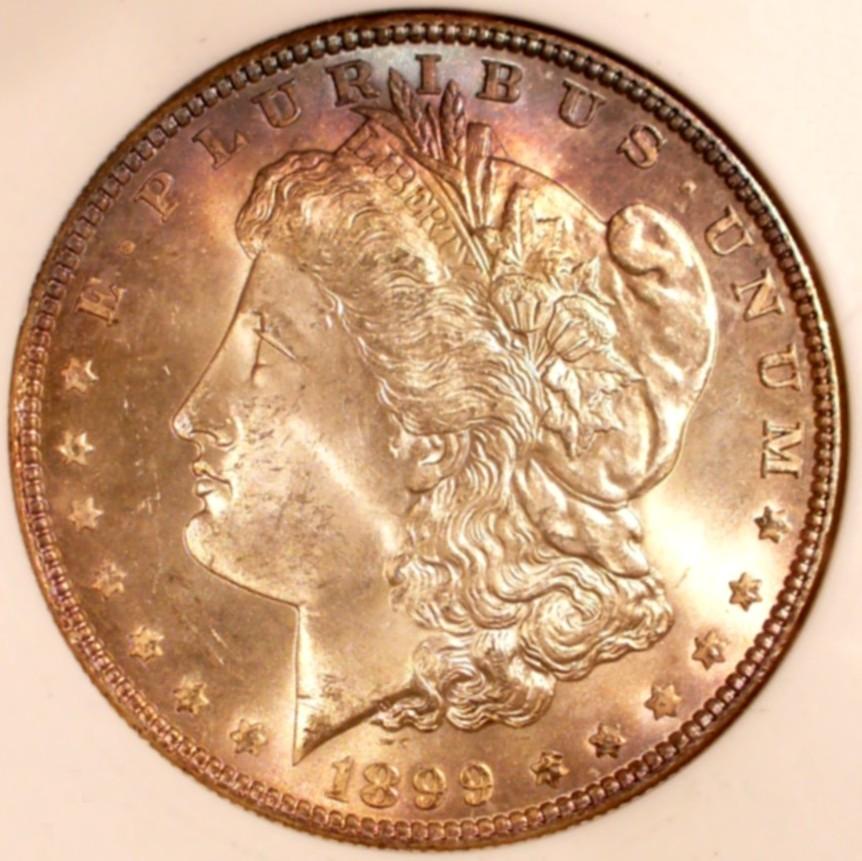
The Morgan dollar (1878–1921) is America’s most-collected silver dollar: the 1893-S key brought over $2 million in top grade, while common dates trade near their silver value. This guide covers the series’ history, the key dates to know, and what drives premiums.
Series history
- The Morgan dollar was authorized by the Bland-Allison Act of February 1878, which required the Treasury to buy silver for coinage; the first pieces were struck in Philadelphia in 1878 (Wikipedia).
- The design — a Liberty head by assistant engraver George T. Morgan — gave the series its name; every Morgan dollar is 90% silver and 10% copper, weighing 26.73 g (412.5 grains) at 38.1 mm (Wikipedia).
- Dies were sent to the western mints in April 1878, and the New Orleans Mint began striking silver dollars in 1879; the Denver Mint, established in 1906, struck Morgans for only one year, 1921 (Wikipedia).
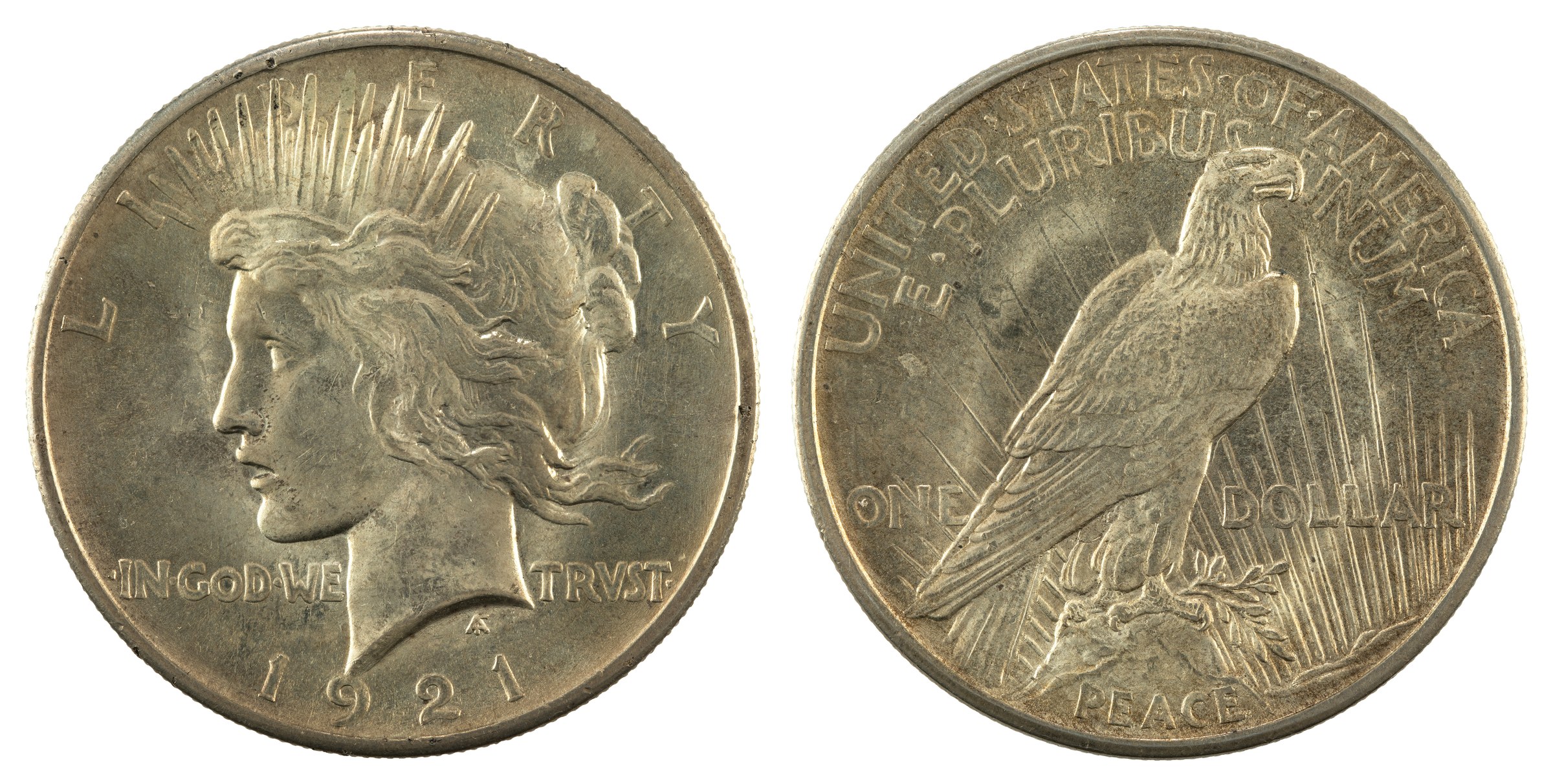
- The series ran 1878–1904, then returned for a final year in 1921 before the Peace dollar took over — the 1921 Morgan is the only Denver-issue Morgan dollar (Wikipedia).
- Under the Pittman Act of 1918, hundreds of millions of silver dollars were melted for bullion (the Act authorized converting up to 350,000,000 dollars), which is why so few high-grade early dates survived (CoinWeek).
- Treasury releases of bagged dollars in the 1960s and the GSA sales of Carson City dollars in the 1970s flooded the market with Mint State examples of some dates — and made unreleased dates like the 1904-S even tougher by comparison (Numismatic News).
Key dates
- 1893-O Morgan Dollar and 1894 Morgan Dollar — the early-1890s issues, when the Sherman Silver Purchase Act’s repeal crushed mintages; the 1893-S is the series key with the smallest business-strike mintage, just 100,000 (Stack’s Bowers).
- 1893-S — the undisputed key: lowest mintage of any business-strike Morgan at 100,000, and even heavily worn examples command strong prices; an MS-67 sold for $2,086,875 in 2021 (Wikipedia; Stack’s Bowers).
- 1895 Morgan Dollar — the “king of the Morgan dollar series”: the only proof-only date, with no business strikes ever made (Heritage; Numismatic News).
- 1889-CC Morgan Dollar — the last Carson City Morgan and the scarcest CC issue; 1878-CC Morgan Dollar — the first Carson City Morgan, and the natural entry point to the CC series.
- 1884-S Morgan Dollar, 1892-S Morgan Dollar, 1895-O Morgan Dollar — low-mintage San Francisco and New Orleans dates from the depressed 1890s that carry strong premiums in Mint State.
- Condition rarities: dates like the 1904-S had mintages over 2.3 million but never appeared in the Treasury releases, so Mint State examples are far tougher than the mintage suggests (Numismatic News).
What drives the premium
- Mint mark and date: Carson City (CC) issues carry the frontier-mint premium; the 1893-S and 1895 sit at the top of every want list (Stack’s Bowers; Heritage).
- Grade: the spread is enormous — an 1893-S in VF trades for a fraction of the $2,086,875 MS-67 record (Wikipedia).
- Originality: Treasury and GSA releases mean many Mint State Morgans exist with bright, original skin; cleaned or dipped coins are heavily discounted (Numismatic News).
- VAM varieties: die varieties catalogued by Van Allen and Mallis carry their own premiums on top of date value — attribution can multiply a common date’s worth.
- Strike: San Francisco issues are typically sharp, while some New Orleans dates are notoriously flat; a strong strike adds value at every grade (Stack’s Bowers).
- Counterfeit risk: the 1893-S is one of the most counterfeited U.S. coins — buy certified (PCGS/NGC) once real money is involved (Wikipedia).
Specifications
- Composition: 90% silver, 10% copper (Wikipedia; Heritage)
- Weight: 26.73 g (412.5 grains) (Wikipedia)
- Diameter: 38.1 mm (Wikipedia)
- Edge: reeded (Wikipedia)
- Designer: George T. Morgan (Wikipedia)
- Years: 1878–1921 (no issues 1905–1920) (Wikipedia)
- Mint marks: none (Philadelphia), CC (Carson City), S (San Francisco), O (New Orleans), D (Denver, 1921 only) (Wikipedia)
Collector notes
- The Morgan dollar is the most widely collected U.S. series by date and mintmark — a complete set is 96+ pieces including major varieties, so most collectors start with a type set or a short set (1921 and the 1930s are absent, so “short sets” run 1878–1904).
- Common-date circulated Morgans are essentially silver plays; the numismatic premium concentrates in the keys, high grades, and original Mint State pieces (Numismatic News).
- GSA-holder Carson City dollars trade at a premium to the same coin cracked out — keep the government holder intact (Numismatic News).
- Weigh before you buy raw: 26.73 g is the standard, so underweight or wrong-diameter pieces are immediately suspect (Heritage).
Market check
Compare live listings for Morgan dollar key dates on eBay:
Search eBay for Morgan dollar key dates
As an eBay Partner, The Coin Wiki may earn from qualifying purchases.