Specifications
- Denomination
- 1 cent
- Series
- Lincoln cent
- Designer
- Victor D. Brenner
- Years of issue
- 1943
- Composition
- 99% Steel, 1% Zinc
- Weight
- 2.702 g
- Diameter
- 19.05 mm
- Edge
- Plain
- Mintage
- 1093838670
- Key mintages
- Combined P/D/S steel-cent mintage; bronze off-metal strikes are not included in the figure.
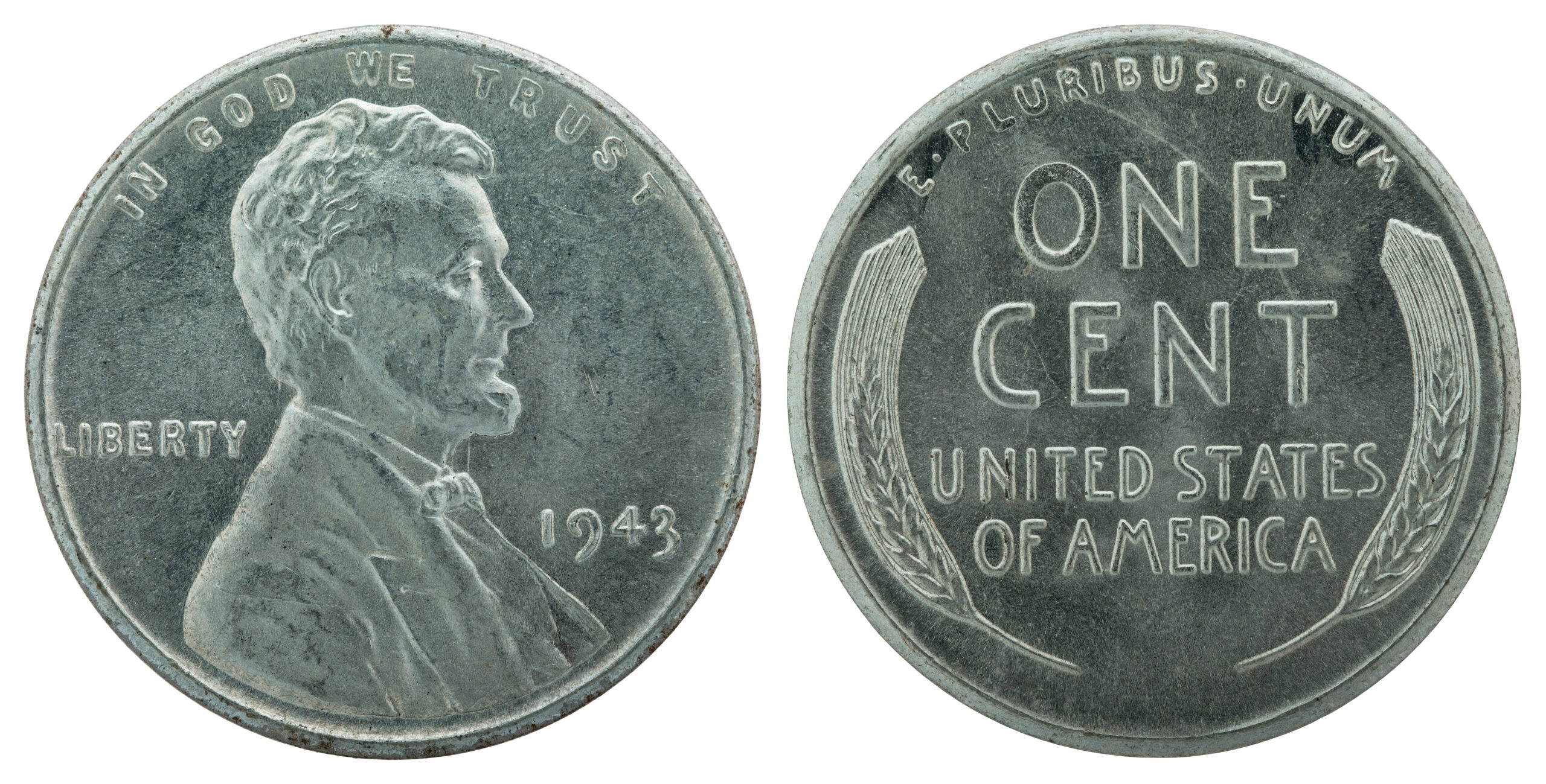
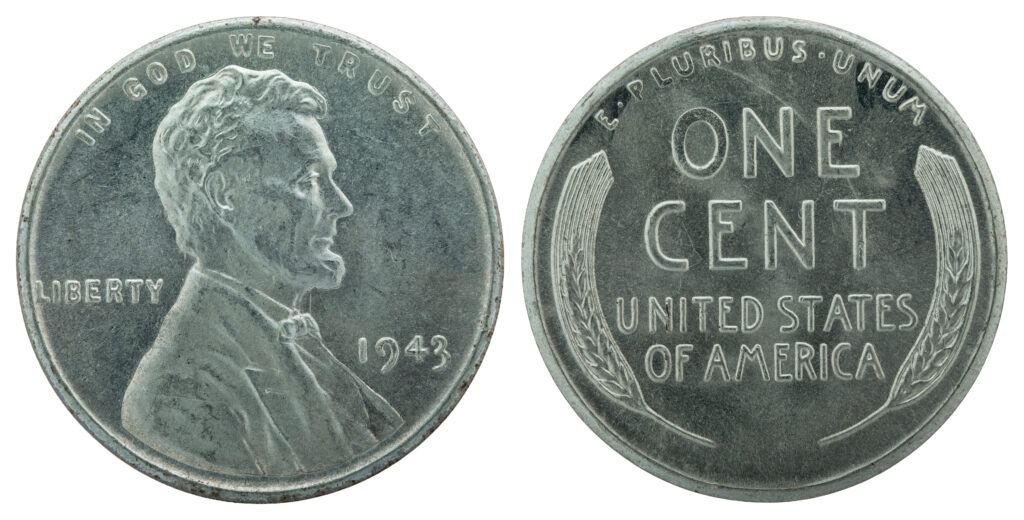
The 1943 steel cent sticks to a magnet and weighs about 2.70 g — a copper-colored one that does not stick is the off-metal error (Wikipedia).
History
- In 1943 the United States Mint struck the Lincoln cent in zinc-coated steel instead of bronze, because wartime demand for copper in ammunition and other military equipment during World War II forced the Mint to conserve copper. After testing substitutes ranging from other metals to plastics, the Mint settled on steel coated with zinc; the new coins were magnetic and 13% lighter than the bronze cents they replaced (Wikipedia).
- The steel cents were struck at Philadelphia, Denver, and San Francisco, with D and S mintmarks below the date for the latter two mints. They were plagued from the start: freshly minted coins were mistaken for dimes, vending-machine magnets placed to catch steel slugs also grabbed the legitimate coins, and punching the blanks cut through the galvanized zinc layer so the exposed edges rusted quickly — even carrying one in a sweaty pocket could start corrosion (Wikipedia).
- After public outcry, the Mint returned the cent to a copper-based alloy for 1944 (made partly from salvaged brass shell casings augmented with pure copper), used through 1946, and the Treasury later collected and destroyed large numbers of 1943 steel cents that had remained in circulation (Wikipedia).
- The famous errors are the off-metal strikes: an estimated 40 bronze cents were struck in 1943 when copper planchets left in press hoppers during the changeover were struck with 1943 dies, with 13 confirmed to exist. A mint-condition 1943-D bronze sold for over $1.7 million in 2010, and the Don Lutes discovery specimen (AU50) realized $204,000 at Heritage Auctions in January 2019. Conversely, a few 1944 cents were struck on leftover steel planchets; 1944 steel cents are fewer in number than their 1943 copper counterparts, and a 1944-S example sold for $373,750 at a Heritage auction in August 2008 (Wikipedia; Heritage Auctions).
What is it worth
- A mint-condition 1943-D bronze sold for over $1.7 million in 2010, and the Don Lutes discovery specimen (AU50) realized $204,000 at Heritage Auctions in January 2019 (Wikipedia; Heritage Auctions).
- A 1944-S steel cent sold for $373,750 at a Heritage auction in August 2008 (Wikipedia).
- 1943 bronze off-metal — an estimated 40 struck, 13 confirmed to exist (Wikipedia).
- 1943-D bronze off-metal — currently unique; a mint-condition example sold for over $1.7 million in 2010 (Wikipedia).
- 1943-S bronze off-metal — 4 known to exist (Wikipedia).
- 1944 steel off-metal — struck on leftover 1943 steel planchets; fewer in number than the 1943 copper cents; a 1944-S sold for $373,750 at Heritage Auctions in August 2008 (Wikipedia).
What drives the premium
- Off-metal rarity drives the biggest premiums: an estimated 40 bronze cents were struck in 1943, with 13 confirmed to exist (Wikipedia).
- For ordinary steel cents, condition — not the date — is the value driver: steel cents rust easily because the punched edges are unprotected, so original uncirculated examples with clean zinc luster command the premiums while corroded pieces lose value quickly (Wikipedia; AccuratePMR).
How to identify the valuable variety
- Authentication is a magnet and a scale: a genuine 1943 steel cent sticks to a magnet and weighs about 2.70 g, while a genuine 1943 bronze cent does not stick and weighs 3.11 g (Wikipedia; AccuratePMR). A copper-colored 1943 that fails the magnet test or hits 3.11 g should be submitted to PCGS or NGC for authentication before it is treated as genuine (AccuratePMR; Wikipedia).
- Counterfeits are common: many fakes are copper-plated steel cents (which still stick to a magnet), or later-date copper cents (usually 1945, 1948, or 1949) with the date altered — genuine 1943 copper cents have the long-tailed 3 shared with the steel cents and an exceptionally sharp strike from the higher-pressure steel dies (Wikipedia).
Specifications
- Composition: 99% steel with a thin layer of zinc (Wikipedia)
- Weight: 2.702 g (Wikipedia)
- Diameter: 19.05 mm (Wikipedia)
- Edge: Plain (Wikipedia)
- Alignment: Not verified in consulted references
- Designers: Obverse: Victor David Brenner; reverse: Victor David Brenner (Wikipedia)
- Mint: Philadelphia, Denver, and San Francisco (Wikipedia)
Collector notes
- Beware ‘reprocessed’ coins: dealers stripped corroded steel cents and replated them with zinc or chrome to look uncirculated; these altered coins have little or no collector value (Wikipedia, citing Alan Herbert).
Market check
Compare live listings for this coin on eBay:
Search eBay for 1943 Steel Cent
As an eBay Partner, The Coin Wiki may earn from qualifying purchases.