
Specifications
- Denomination
- 1 cent
- Series
- Lincoln cent — Wheat reverse, VDB
- Designer
- Victor David Brenner
- Years of issue
- 1909
- Weight
- 3.11 g
- Diameter
- 19.05 mm
- Edge
- Plain
- Mintage
- 484000
- Key mintages
- 484,000 struck at San Francisco; Philadelphia struck 27,995,000 VDB cents (Wikipedia)
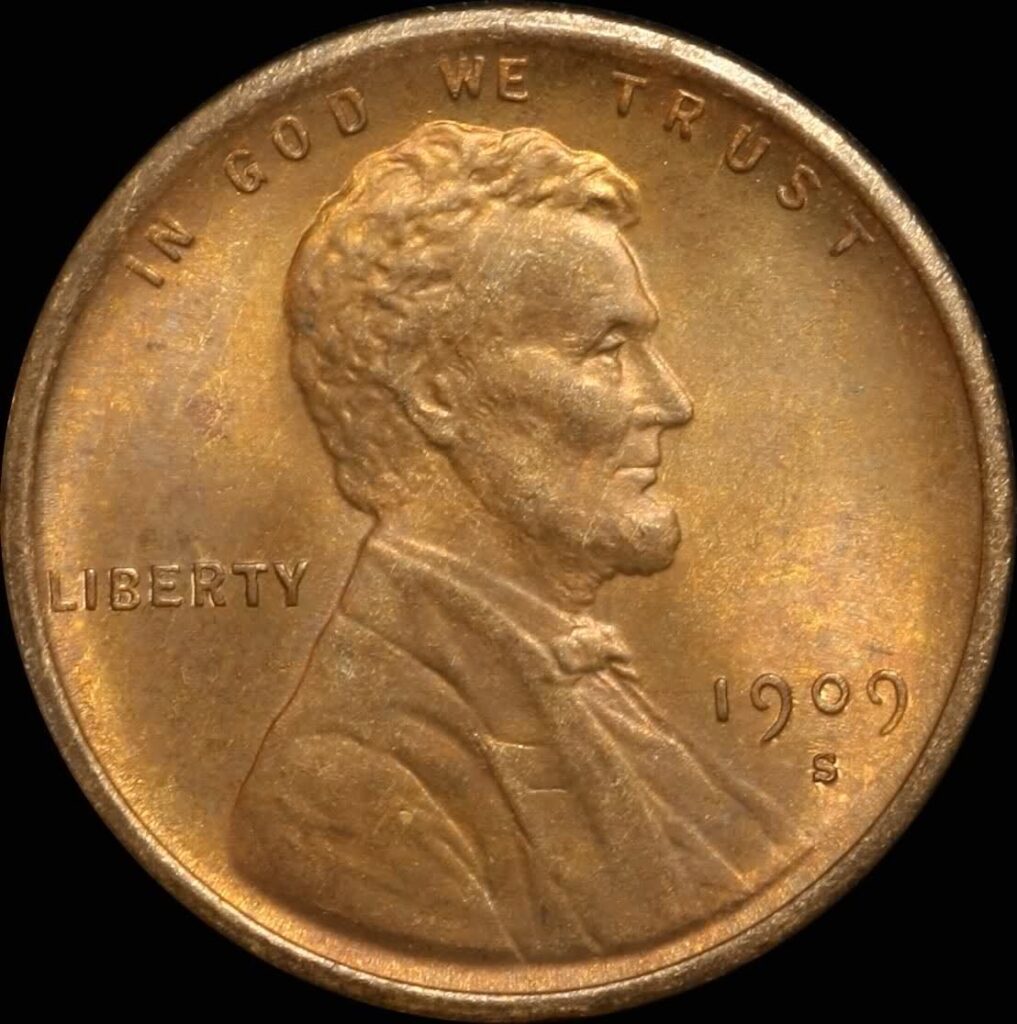
484,000 struck at San Francisco — the rarest Lincoln cent, discontinued within days of release over the designer's initials.
History
- The 1909-S VDB Lincoln Cent was the first issue of the Lincoln cent, which replaced the Indian Head cent and became the first everyday U.S. coin to feature a specific real person — Abraham Lincoln (Wikipedia). President Theodore Roosevelt ordered the new design from sculptor Victor David Brenner, adapting a plaque Brenner had created years earlier; the Lincoln portrait traces to a Mathew Brady photograph (Wikipedia).
- The coin was delayed so the motto “In God We Trust” could be added at President William Howard Taft’s insistence, and it was finally released on August 2, 1909, to long lines — police on horseback were called in to control crowds in New York City, and speculators quickly resold the new pennies for as much as 25 cents (Wikipedia).
- Within days, the coin was discontinued: on August 6, 1909, the Washington Post proclaimed the “V.D.B. Cent Doomed” after Treasury Secretary Franklin MacVeagh objected to Brenner’s initials on the reverse (Wikipedia). Brenner, who said the first accepted dies had carried his full name, told the Post he would demand an explanation, but the initials were removed from the dies (Wikipedia; Numismatic News).
- The San Francisco Mint produced only 484,000 VDB cents against 27,995,000 at Philadelphia, making the 1909-S VDB the rarest variety of the Lincoln cent series (Wikipedia). Numismatist Joshua McMorrow-Hernandez has called it “The Holy Grail” in penny collecting, and collectors have long maintained it “may always be the king of Lincoln Cents” (Wikipedia).
- The issue became instantly collectible on news of its cancellation and remains a numismatic rarity more than a century later; the authors of 100 Greatest U.S. Coins ranked it the 14th most collectible U.S. coin, and in 2019 Heritage Auctions sold an MS67 example for $50,400 (Wikipedia). Brenner’s initials did not return to the coin until 1918, when they were placed in small letters on the obverse below Lincoln’s shoulder (Wikipedia).
Key dates and varieties
- 1909-S VDB (San Francisco, 484,000) — the rarest Lincoln cent variety and the only VDB issue struck at San Francisco (Wikipedia).
- 1909 VDB (Philadelphia, 27,995,000) — the common counterpart struck at the main mint during the same brief production window (Wikipedia).
- VDB initials returned to the Lincoln cent in 1918, relocated to the obverse below Lincoln’s shoulder (Wikipedia).
Specifications
- composition
- weight
- diameter
- edge
- alignment
- designers
- mint
Collector notes
- Authentication diagnostics (Numismatic News): genuine examples show a square, box-like ‘S’ mintmark with a notch in the upper serif and a raised lump in the upper loop, and the center bar of the ‘B’ in VDB must be parallel. Heritage Auctions notes four documented mintmark positions, including a low-right placement.
- Because this issue is heavily counterfeited and altered, raw examples should be checked against the published diagnostics above and certification is recommended.
Market check
Compare live listings for this coin on eBay:
Search eBay for 1909-S VDB Lincoln Cent
As an eBay Partner, The Coin Wiki may earn from qualifying purchases.
Related Coins
Live on eBay
Live asking prices — not sale records.
 1909-S VDB Lincoln Wheat Cent Penny NGC G 6 Key Date$965.00View on eBay
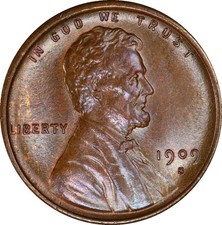 1909 S MS65BN VDB Lincoln Cent PCGS 40341251$4,698.63View on eBay
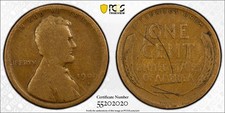 1909-S VDB Lincoln Wheat Cents Lincoln, PCGS G Details$750.00View on eBay
As an eBay Partner, The Coin Wiki may earn from qualifying purchases.
FREE DOWNLOAD
Before you spend that coin, check it.
The Pocket Change Key-Date Checklist covers the cents, nickels, dimes, quarters and halves still hiding in circulation — including the 1943 and 1983 errors worth five figures. One page to print, a lifetime of jars to check.