
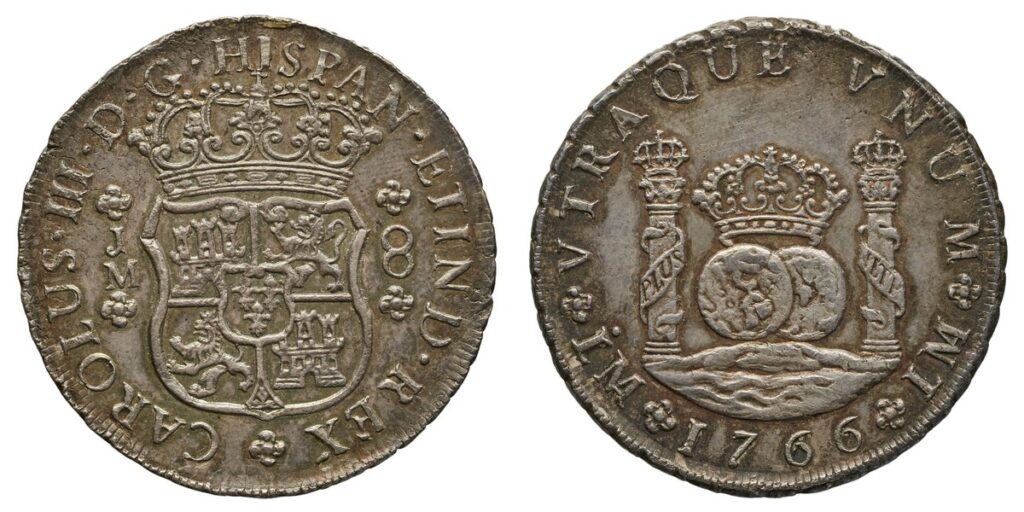
From the oldest mint in South America: Lima’s 8 reales — pillar dollars 1751–1772, then the portrait type from 1772.
History
- The Lima mint was inaugurated August 21, 1565; actual coining began September 1568 — the oldest mint in South America.
- Milled pillar (columnario) coinage reached Lima in 1751; the pillar 8 reales was produced there until 1772 in denominations from 1/2 through 8 reales, about 39.5 mm with a protective corded ("tulip") edge.
- From 1772, Charles III’s ordinances replaced the pillar type with the portrait/bust type (king’s bust obverse, arms reverse) — at Lima and empire-wide.
- Colonial Lima struck silver reales and gold escudos continuously through the viceregal period.
Key dates & varieties
- The 1772 type-change is the key attribution break between pillar and bust issues.
- Lima pillar dollars carry LIMA/LIMAE mintmarks and assayer initials.
Specifications
- Pillar 8 reales: about 39.5 mm; colonial 8 reales nominally about 27 g of silver (circulated examples 26.5–27 g).
Collector notes
- Attribute by mintmark — Lima pillars are distinguished from Mexico City pillars by the LIMAE mark, not by design alone.
Market check
As an eBay Partner, The Coin Wiki may earn from qualifying purchases.
FREE DOWNLOAD
Before you spend that coin, check it.
The Pocket Change Key-Date Checklist covers the cents, nickels, dimes, quarters and halves still hiding in circulation — including the 1943 and 1983 errors worth five figures. One page to print, a lifetime of jars to check.