
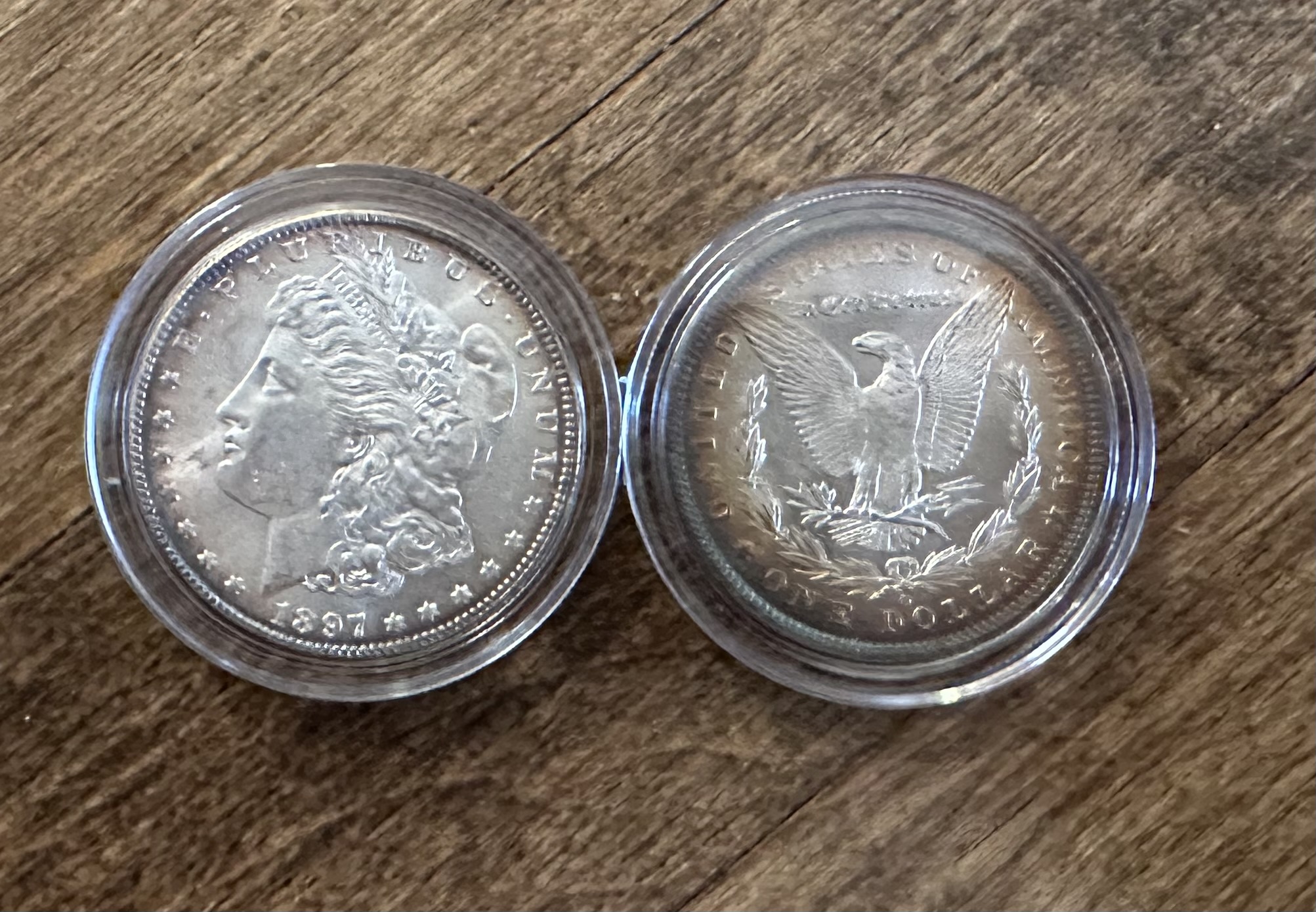
The rainbow colors on old silver coins are chemistry, not magic: how toning forms, when it adds value, and why you should never try to remove it.
What it is
- Toning is the color change that forms on a coin's surface when metal reacts with chemicals in its environment — typically sulfur compounds — creating a thin layer of tarnish or oxidation (Wikipedia).
- It is most common on silver coins, but gold, copper, and nickel coins can tone as well (Wikipedia).
- Toning develops slowly over years of storage: in albums, envelopes, mint bags, or original packaging (The Spruce Crafts).
- The famous rainbow-toned Morgan dollars got their colors from decades stored in canvas U.S. Treasury bags (The Spruce Crafts).
When toning adds value
- Attractive, natural toning can add significant eye appeal — vivid rainbow-toned coins sometimes bring premiums several times what an untoned example would (The Spruce Crafts).
- Crescent toning — color along part of the rim where a coin sat against a bag or album page — is a classic, widely collected pattern (Wikipedia).
- But toning can also reduce value: dark, dull, or splotchy toning hurts eye appeal, and the market decides which is which (Wikipedia).
Natural vs. artificial toning
- Natural toning forms over years through genuine storage conditions (The Spruce Crafts).
- Artificial toning is deliberately created by “coin doctors” using heat or chemicals to imitate the natural look — and it can be very difficult to tell the difference (The Spruce Crafts).
- Third-party grading services examine toning closely, and coins judged artificially toned are treated accordingly (The Spruce Crafts).
- Buy toned coins from reputable sellers, and be skeptical of rainbow colors that look too perfect or too uniform (The Spruce Crafts).
Common mistakes
- Removing toning: dipping or polishing a toned coin counts as cleaning — grading services will label it “Details: Cleaned,” destroying the premium (Numismatic News).
- Paying a big toning premium for a coin without confidence the toning is natural (The Spruce Crafts).
- Storing coins in materials with sulfur (some papers, cardboard, rubber bands) and accidentally toning — or spotting — them (Wikipedia).
Key facts
- Toning = surface color change from chemical reaction/oxidation, usually sulfur compounds (Wikipedia).
- Most common on silver; famous on Morgan dollars from Treasury bag storage (Wikipedia; The Spruce Crafts).
- Attractive natural toning can add a large premium; ugly toning detracts (The Spruce Crafts; Wikipedia).
- Artificial toning exists and is hard to detect; never remove toning — removal = “cleaned” (The Spruce Crafts; Numismatic News).
Market check
Compare live toned Morgan dollar listings on eBay:
Search eBay for toned Morgan dollars
As an eBay Partner, The Coin Wiki may earn from qualifying purchases.
FREE DOWNLOAD
Before you spend that coin, check it.
The Pocket Change Key-Date Checklist covers the cents, nickels, dimes, quarters and halves still hiding in circulation — including the 1943 and 1983 errors worth five figures. One page to print, a lifetime of jars to check.