Specifications
- Denomination
- 1 dollar (壹圓)
- Series
- Yuan Shih-kai 'Fat Man' dollars
- Designer
- Luigi Giorgi
- Years of issue
- 1914
- Composition
- 89% Silver, 11% Copper
- Weight
- 26.4 g
- Diameter
- 39 mm
- Edge
- Reeded
- KM
- Y329
- Key mintages
- Type total ≈1.1B across 1914–1928 incl. restrikes to the 1950s (Wikipedia); 1914-dated pieces struck in huge quantities — no reliable 1914-only mintage; weight 26.4 g per Heritage vs 26.857 g (0.72 kuping tael) per Wikipedia
Melt value: $48.69
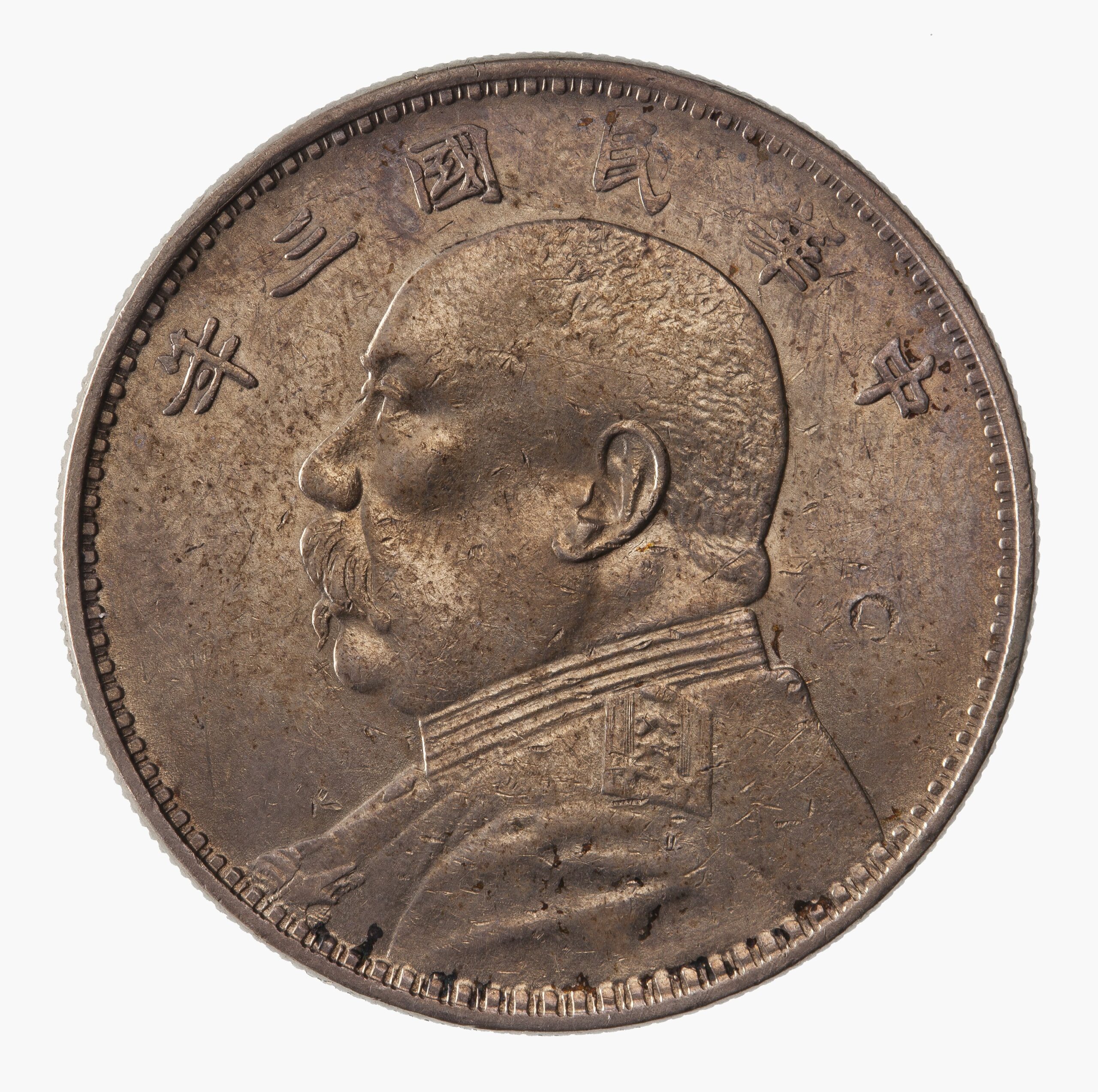
KM-Y329 'Fat Man' dollar · 26.4g silver · struck in the hundreds of millions and restruck for decades — authentication, not rarity, is the hard part.
History
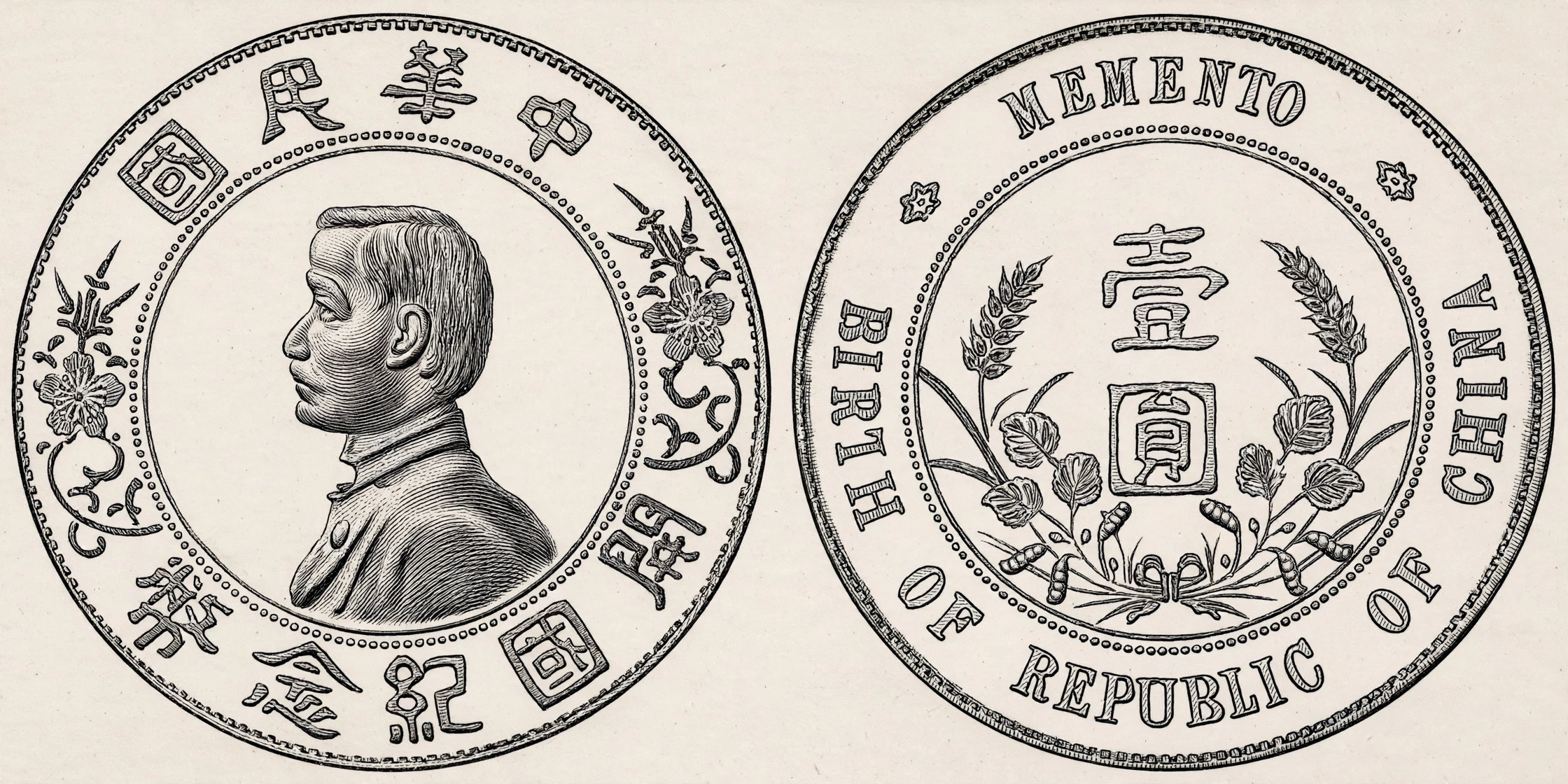
- Issued in Year 3 of the Republic (1914), the first year of the Yuan Shih-kai portrait dollar, which replaced Sun Yat-sen’s ‘Memento’ dollar as the primary silver dollar of the early republic (Heritage Auctions; Wikipedia, accessed 2026-09-16).
- Nicknamed the ‘Fat Man’ dollar for Yuan’s full-cheeked portrait, the design was engraved by Luigi Giorgi, chief engraver of the Tientsin mint from 1910–1920 (Wikipedia; Heritage Auctions, accessed 2026-09-16).
- The type was struck at many Chinese mints (Tientsin/Tianjin, Nanking, Canton, Wuchang, Mukden, Hangzhou) with an estimated total near 1.1 billion across 1914–1928, and dated-1914 pieces were restruck into the 1950s, so the type is not rare in circulated grades (Wikipedia; Numismatic News, accessed 2026-09-16).
- A separate 1914 ‘Plumed Hat’ commemorative (KM-Y322, honoring Yuan as founder of the Republic) is a different, far rarer issue — not to be confused with the circulating Fat Man dollar (Heritage Auctions, accessed 2026-09-16).
Key dates and varieties
- Year 3 (1914) is the first and most-collected date; Years 8, 9, 10 (1919–1921) complete the commonly found set, all KM-Y329 (Heritage Auctions, accessed 2026-09-16).
- KM-Y329.4: ‘O’ mintmark subvariety (L&M-63C, ‘Yuan’ connected / triangle yuan) — Heritage sold an MS63 example, showing variety premiums (Heritage Auctions, accessed 2026-09-16).
- Recut star and character varieties exist on 1914-dated pieces (Heritage Auctions lot 38212, accessed 2026-09-16).
- The L. Giorgi signed specimen pattern (KM-Pn31, ‘L. Giorgi’ above shoulder) is the elite rarity of the design (Heritage Auctions, accessed 2026-09-16).
Specifications
- composition
- weight
- diameter
- edge
- designers
- mint
Collector notes
- COUNTERFEIT DIAGNOSTIC: The design is low relief and lacks sharp detail, making it easy to fake; genuine coins vary wildly die to die (lapel collar designs, edge reeding style and reed counts differ across mints), so die-variety alone is not a red flag — but out-of-tolerance weight/fineness, dull gray surfaces, and mushy detail are (Numismatic News, accessed 2026-09-16).
- COUNTERFEIT DIAGNOSTIC: Many fakes are out of tolerance on fineness and weight; most numismatists spot the typical dull-gray fake quickly — verify weight (26.4 g) and specific gravity against a known genuine piece, and prefer third-party certified examples (Numismatic News, accessed 2026-09-16).
- Value factors: grade is everything — circulated pieces trade near bullion premiums while certified mint-state examples bring strong premiums; original luster and the O-mintmark/recut-star varieties carry extra value (Heritage Auctions, accessed 2026-09-16).
- Restrikes with the 1914 date were produced into the 1950s, so ‘1914’ on the coin does not guarantee a 1914 striking (Numismatic News, accessed 2026-09-16).
Market check
Compare live listings for this coin on eBay:
Search eBay for 1914 Yuan Shih-kai Dollar
As an eBay Partner, The Coin Wiki may earn from qualifying purchases.