
Austria
Austria’s coinage runs from the great silver thalers of the Habsburg Empire — the Maria Theresa thaler became the world’s most famous trade coin — through the 1892 currency reform that made the corona Austria’s first gold-standard currency, the schilling years, and into the modern euro era, all centered on the Vienna-based Austrian Mint (Münze Österreich).
Coins of Austria
Every coin entry in this wiki — one tap to the full page.
Showing 6 of 6
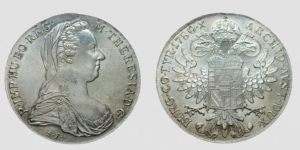 1780 Maria Theresa ThalerAI-generated illustration (no usable free real photo with verifiable Commons file-page licensing located). Design reference: Chards.co.uk…View coin ›
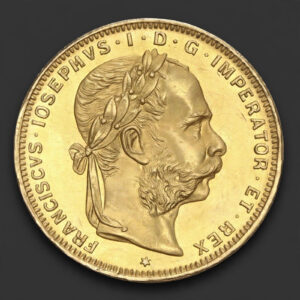 1892 20 KronenAI-generated illustration — not a photograph of a genuine coin. First year of the 20-corona denomination…View coin ›
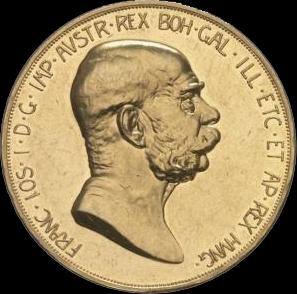 1908 100 Corona (60th Anniversary of Reign)Public domain — Timur Lenk, via Wikimedia Commons (coin: Austrian Mint, Vienna) Franz Joseph I's 60th…View coin ›
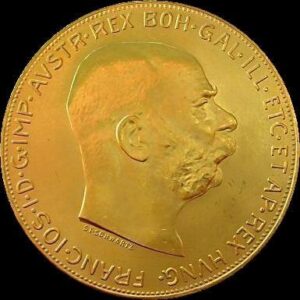 Austrian 100 Corona Gold (1908–1915)Austria 100 Corona 1915, the standard 1909–1915 type (KM# 2819). Photo: Wikimedia Commons, public domain (photo:…View coin ›
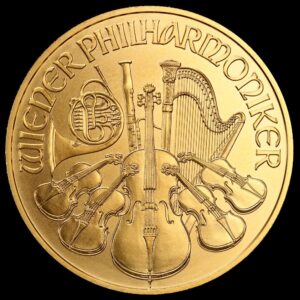 Austrian Gold Philharmonic (1989–Date)Introduced in 1989, the Gold Philharmonic is Europe's best-selling gold bullion coin — one ounce of…View coin ›
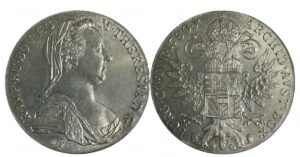 Maria Theresa Thaler 1780 (Restrikes)The Maria Theresa thaler, always dated 1780, is the most successful trade coin in history —…View coin ›
History & collecting
The story behind the coins, one tap away.
- Issued: 1780–date (every piece carries the 1780 date, frozen at Maria Theresa’s death; original issues ran 1780–1858 and Austrian Mint restrikes continue today)
- Composition: .833 fine silver, ~28.07 g, 41 mm (~0.7517 oz ASW)
- Key dates: None on the date — nearly everything on the market is a restrike; original 18th-century strikes are the specialty-market coins
- Notable varieties: Original strikes vs. official Austrian Mint restrikes (restrike identification is the core authentication story; declared an official Austrian trade coin 19 September 1857 and used as de facto currency in the Horn of Africa, Arabian Peninsula, and India into the 20th century)
Value: Check live sold listings on the linked guide before buying or pricing. For metal value, use the melt calculator.
- Issued: 1908–1915 (original strikes 1908–1914, introduced for the 60th anniversary of Franz Joseph I’s reign; Austrian Mint restrikes dated 1915 began in 1975)
- Composition: .900 fine gold, 33.8753 g, 37 mm, 0.9802 oz actual gold weight
- Key dates: original 1908–1914 strikes trade as the numismatic coins; the overwhelming majority of the market is 1915-dated restrikes
- Notable varieties: part of the 1892 corona gold system — 10 corona (1892–1912) and 20 corona (struck to 1915) are its smaller companions
Value: Check live sold listings on the linked guide before buying or pricing. For metal value, use the melt calculator.
The Austrian Gold Philharmonic (introduced 1989) is Europe’s best-selling gold bullion coin: 1 oz of .9999 fine gold, 37 mm, with the Musikverein organ and orchestral instruments. Face value was 2,000 schillings until the euro changeover, €100 since.
Value: Check live sold listings on the linked guide before buying or pricing. For metal value, use the melt calculator.
Values move; always check live sold listings on the linked guides. Key dates and high-value pieces require authentication.
Values move — always check sold listings on the linked entries before buying or pricing. The two authentication rules that matter most: most Maria Theresa thalers and 1915-dated coronas are official restrikes, and high-value Austrian gold is widely counterfeited, so key dates and original strikes warrant certified examples (PCGS/NGC).
Europe Red Book v2 research chapter, published September 15, 2026. Values are intentionally excluded; use authenticated sold-market evidence.
Real prices come from real sales. Check what Austria coins are actually selling for right now.
Live eBay listingsSold eBay listingsSee live Austria dealsMatching checklists & toolsAs an eBay Partner, The Coin Wiki may earn from qualifying purchases.
FREE DOWNLOAD
Before you spend that coin, check it.
The Pocket Change Key-Date Checklist covers the cents, nickels, dimes, quarters and halves still hiding in circulation — including the 1943 and 1983 errors worth five figures. One page to print, a lifetime of jars to check.