
Specifications
- Denomination
- 1 Mohur (15 Rupees)
- Series
- British India uniform gold coinage
- Designer
- William Wyon
- Engraver
- William Wyon
- Years of issue
- 1835–1901; 15 rupees 1918
- Weight
- 11.66 g
- Diameter
- 25 mm
- Key mintages
- 1835 William IV; Victoria 1841 (442,000), 1862 (153,000), late KM 496 issues 12,000–23,000; 1918 15 rupees 2,110,000
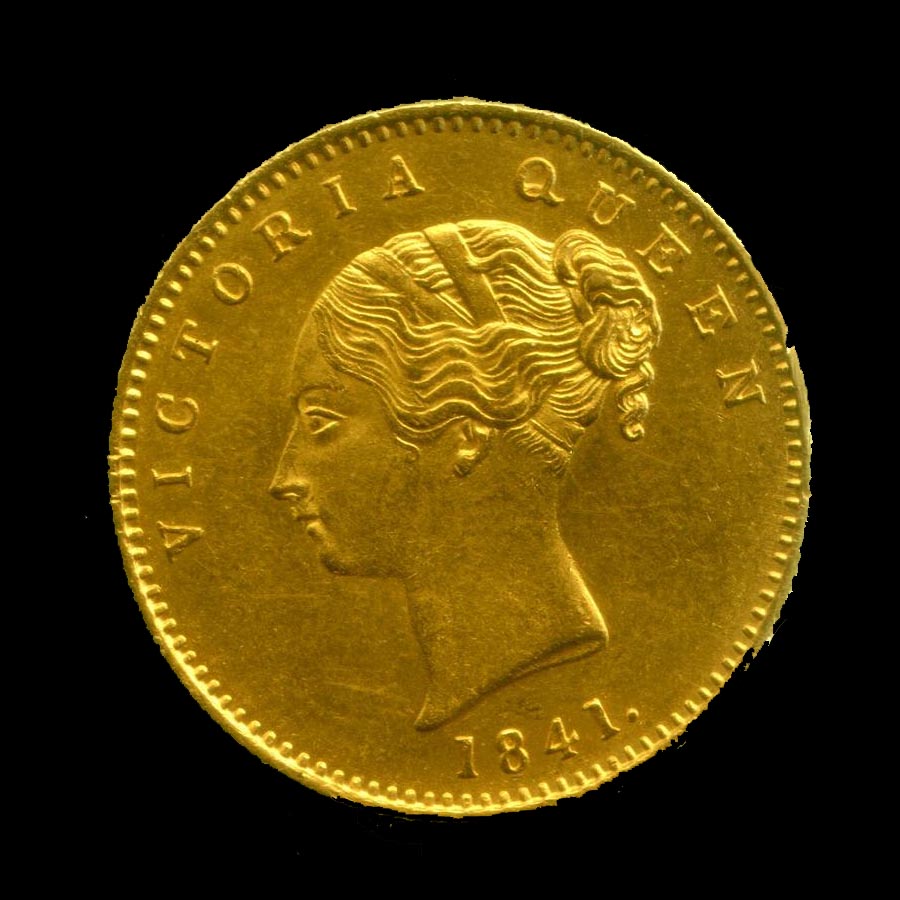
The 15-rupee gold standard of British India: 11.66 g of .917 fine gold (22 karat) — William IV and Victoria portrait mohurs, 1835–1901, with George V's one-off 1918 15-rupees gold piece closing the series.
History
- The gold mohur as a denomination was introduced between 1540 and 1545 by Sher Shah Suri as a way of uniting India’s tribes under a single form of currency, encouraging trade and peace. (The Royal Mint, accessed 2026-09-27)
- The East India Company’s great currency reform of 1835 standardized the British mohur at 11.66 g, .917 fine gold. (CoinArchives, accessed 2026-09-27; NGC, accessed 2026-09-27)
- The first mohur to feature a British monarch’s portrait was the William IV issue of 1835 (KM 451): head right, legend ‘WILLIAM IIII, KING’, with the lion-and-palm-tree reverse. (The Royal Mint, accessed 2026-09-27; NGC, accessed 2026-09-27)
- Victoria young-head mohurs followed in 1841 (KM 461/462), engraved by William Wyon: ‘VICTORIA QUEEN’ with a lion striding beneath a palm tree on the reverse, the symbol of the East India Company. (NGC, accessed 2026-09-27; CoinArchives, accessed 2026-09-27)
- After the 1857 rebellion and the transfer of India to direct Crown rule in 1858, uniform coinage began; the 1862 mohur (KM 480) was the inaugural year of Victoria’s post-transfer portrait gold coinage. (Numista, accessed 2026-09-27; CoinArchives, accessed 2026-09-27)
- Victoria was proclaimed Empress of India on 1 January 1877, and from 1877 the mohur bore the ‘VICTORIA EMPRESS’ legend (KM 496). (Scribd ‘Coins of British India Since 1835’, accessed 2026-09-27; Numista, accessed 2026-09-27)
- No gold coins were issued during the reign of Edward VII (1901–1910). (Scribd ‘Coins of British India Since 1835’, accessed 2026-09-27)
- Under George V a special gold 15-rupee piece was issued only once, in 1918 (KM 525) — sovereign-weight at 7.9881 g — to pay for wheat purchased from the Punjab. (Scribd ‘Coins of British India Since 1835’, accessed 2026-09-27; NGC, accessed 2026-09-27)
- The British sovereign was legal tender in India and equivalent to 15 rupees (1 mohur); Bombay minted sovereigns dated 1918 (KM A525). (WorldofCoins.eu forum, accessed 2026-09-27; NGC, accessed 2026-09-27)
- In 1927 the 15-rupee gold piece was demonetized, which likely explains why it is far rarer than the 1918 Bombay sovereign despite a 2.1-million mintage — many were melted. (WorldofCoins.eu forum, accessed 2026-09-27)
- Princely states such as Jodhpur struck their own mohurs in the names of Edward VII and George V — these are princely-state issues, not British India mohurs. (Numista, accessed 2026-09-27)
Key dates and varieties
- 1835 William IV (KM 451.1) — the first British-monarch portrait mohur, rare; even NGC’s guide lists no circulating-mintage figure. (NGC, accessed 2026-09-27)
- 1841 Victoria young head (KM 462.1) — mintage 442,000. (NGC, accessed 2026-09-27)
- 1862 Victoria Queen (KM 480) — mintage 153,000, first year of the uniform Crown-rule type. (heritcoin.com, accessed 2026-09-27)
- Late Empress issues (KM 496): 1879-C (19,000), 1881 (23,000), 1882-C (12,000), 1888 (15,000), 1889 (15,000) — all rated Rare to Extremely Rare. (heritcoin.com, accessed 2026-09-27)
- 1918 15 rupees (KM 525) — mintage 2,110,000, but only 12 proofs struck; the circulation issue is far scarcer than the mintage suggests. (NGC, accessed 2026-09-27)
Specifications
- Weight 11.6600 g, fineness 0.9170 (22 karat), yielding 0.3438 oz fine gold (AGW). (NGC, accessed 2026-09-27)
- Diameter 24 mm on the early 1841 issues, 25 mm on the later Victoria and William IV types. (heritcoin.com, accessed 2026-09-27; NGC, accessed 2026-09-27)
- Edge milled. (NGC, accessed 2026-09-27)
- Obverse: portrait of the reigning monarch — head right for William IV (‘WILLIAM IIII, KING’), head left for Victoria (‘VICTORIA QUEEN’ / ‘VICTORIA EMPRESS’). (NGC, accessed 2026-09-27)
- Reverse: lion walking left before a palm tree with ‘EAST INDIA COMPANY’ on early issues; later issues show the denomination within a wreath. (NGC, accessed 2026-09-27)
- Monetary standard: 1 mohur = 15 rupees; 3 pies = 1 paisa, 4 paisas = 1 anna, 16 annas = 1 rupee. (Numista, accessed 2026-09-27)
- Struck at Bombay (B) and Calcutta (C); Calcutta coins show a small incuse ‘C’ mint mark at 6 o’clock. (ezanchem.com ‘Indian Mint Marks’, accessed 2026-09-27; NGC, accessed 2026-09-27)
- Engraver: William Wyon for the Victoria young-head series. (heritcoin.com, accessed 2026-09-27; CoinArchives, accessed 2026-09-27)
Collector notes
- Authentication tip: many mohur issues exist as official prooflike restrikes (NGC lists them separately) — a genuine 1-mohur must weigh 11.66 g at .917 fineness. (NGC, accessed 2026-09-27)
- Do not confuse the 1918 15-rupees piece with the mohur: it is sovereign-weight (7.99 g), not the 11.66 g mohur standard. (NGC, accessed 2026-09-27)
- Source discrepancy to note: The Royal Mint says four monarchs (William IV, Victoria, Edward VII, George V) featured on the mohur, but for British India Edward VII issued no gold coinage — Edward VII and George V ‘mohurs’ are princely-state issues (e.g. Jodhpur). (The Royal Mint, accessed 2026-09-27; Scribd ‘Coins of British India Since 1835’, accessed 2026-09-27; Numista, accessed 2026-09-27)
- The 1841 Victoria reverse — lion calmly striding beneath a palm tree — is among the most celebrated designs in British Indian numismatics. (CoinArchives, accessed 2026-09-27)
- Half-mohur and double-mohur denominations exist, and a rare 1841 mule (KM A462, obverse of KM 462 with reverse of KM 451) is catalogued. (NGC, accessed 2026-09-27)
Market check
Compare live listings for this coin on eBay:
Search eBay for Indian Gold Mohur (British India)
As an eBay Partner, The Coin Wiki may earn from qualifying purchases.
FREE DOWNLOAD
Before you spend that coin, check it.
The Pocket Change Key-Date Checklist covers the cents, nickels, dimes, quarters and halves still hiding in circulation — including the 1943 and 1983 errors worth five figures. One page to print, a lifetime of jars to check.