
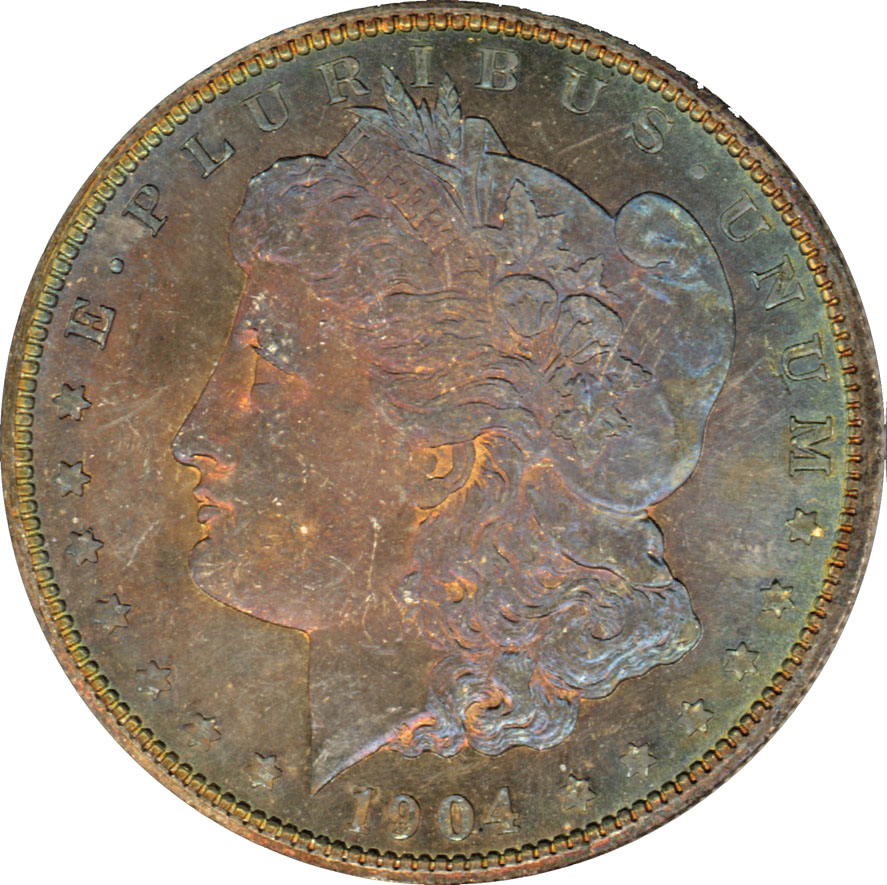
The two giants of third-party coin grading: what PCGS and NGC each do, how they differ, and why the coin inside the holder still matters more than the label.
What they are
- PCGS (Professional Coin Grading Service) and NGC (Numismatic Guaranty Company) are the two leading third-party coin grading services: independent companies that authenticate coins, assign a grade, and seal them in tamper-evident holders (Bullion House).
- In a Professional Numismatists Guild survey of dealers, both services were rated “Superior” — the top tier — ahead of every other grading service (Numismatic News).
- Both use the 1–70 Sheldon scale, both publish population reports showing how many coins they've graded at each level, and both offer online certification verification so buyers can confirm a holder is genuine (The Bullion Bank).
- The services have competed for nearly four decades, and that rivalry is widely credited with professionalizing coin grading (Gainesville Coins).
How they differ
- Market perception: PCGS is often described as having an edge in the U.S. rare-coin market, with some collectors paying premiums for PCGS holders on American classics (Gainesville Coins).
- World coins: NGC is often described as the stronger choice for world and ancient coins, with broader expertise outside U.S. issues (Gainesville Coins).
- Cost and speed: NGC is generally described as the more affordable option with faster turnaround on economy submissions (Gainesville Coins).
- Holders and services: both offer a range of holder types and specialty services; comparing current submission tiers on each company's site is the way to choose for a specific coin.
What to look for
- Buy the coin, not the holder: the Professional Numismatists Guild's advice is to judge the coin's quality itself, since grading is ultimately an opinion (Numismatic News).
- Verify any certified coin's certification number on the grading service's website before paying a premium (The Bullion Bank).
- For expensive raw coins, the cost of certification by either service is cheap insurance against counterfeits and overgrading (Bullion House).
Common mistakes
- Assuming one service's holder automatically guarantees a higher price — premiums vary by series, grade, and market conditions (Gainesville Coins).
- Treating third-tier grading services as equivalent to PCGS or NGC — the PNG survey put both in a class of their own (Numismatic News).
Key facts
- PCGS and NGC are the two top-tier third-party graders, both rated “Superior” in a PNG dealer survey (Numismatic News).
- Both use the 1–70 scale, tamper-evident holders, population reports, and online cert verification (The Bullion Bank).
- PCGS is often favored for U.S. rarities; NGC for world coins and value on submissions (Gainesville Coins).
- Always verify the cert number, and judge the coin itself — not just the label (Numismatic News).
Market check
Compare live PCGS and NGC graded coin listings on eBay:
Search eBay for PCGS and NGC coins
As an eBay Partner, The Coin Wiki may earn from qualifying purchases.
FREE DOWNLOAD
Before you spend that coin, check it.
The Pocket Change Key-Date Checklist covers the cents, nickels, dimes, quarters and halves still hiding in circulation — including the 1943 and 1983 errors worth five figures. One page to print, a lifetime of jars to check.