
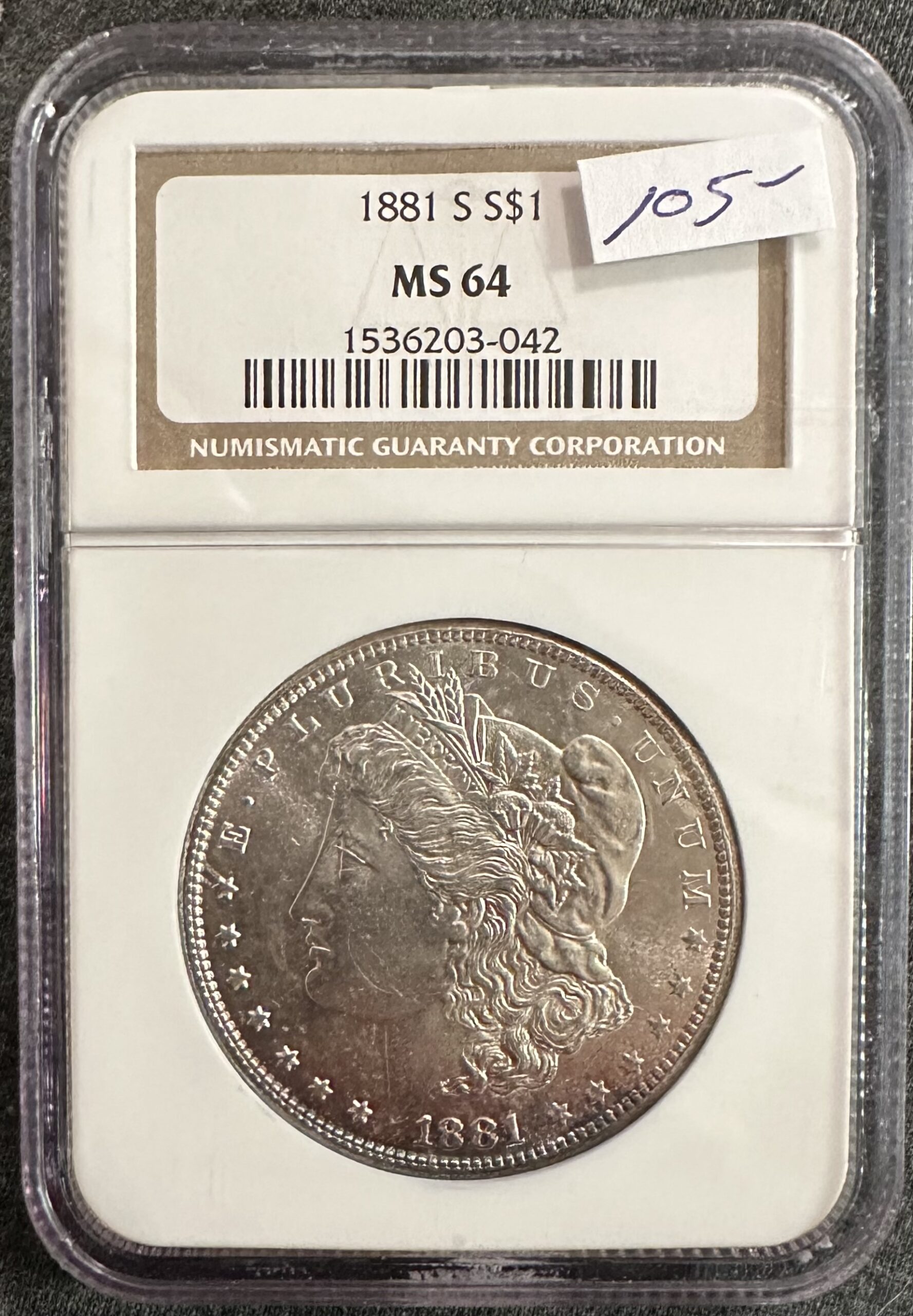
MS means no wear, AU means a whisper of it, XF means light wear on the high points — how the 1–70 grading scale actually works and why it drives coin values.
What it is
- Coin grading is the process of assigning a coin a condition rating, expressed as a number from 1 to 70 on the Sheldon scale plus an adjective, so buyers and sellers can agree on what a coin is worth (NGC).
- The numeric scale runs from Poor (PR-1) at the bottom to Mint State 70 (MS-70) or Proof 70 (PF-70) at the top; MS-70 means a coin has no post-production imperfections even under 5x magnification (NGC).
- Most circulated coins fall between Good (G-4 to G-6) and Extremely Fine (XF-40 to XF-45), while uncirculated coins grade MS-60 through MS-70 (NGC).
- Grade directly drives value: a coin in MS-65 can be worth many times what the same coin brings in MS-63, so accurate grading is where real money is made or lost (The Bullion Bank).
The three grades that matter most
- MS (Mint State), 60–70: no trace of wear; marks, strike, and eye appeal separate the levels. MS-60 is technically uncirculated but heavily marked, while MS-65 and above are the premium “gem” grades (NGC).
- AU (About Uncirculated), 50–58: only the slightest wear on the highest points, with full details. AU-58 shows slight wear on the high points; AU-50 shows wear across more than half the design (NGC).
- XF (Extremely Fine), 40–45: complete details with minor wear on the high points — XF-45 on some high points, XF-40 on most of them (NGC).
The full adjectival scale
- Poor (PR-1), Fair (FR-2), About Good (AG-3): heavy wear, readable date but little else (NGC).
- Good (G-4 to G-6), Very Good (VG-8 to VG-10): major features worn but outlined (NGC).
- Fine (F-12 to F-15): moderate wear with clear design elements (NGC).
- Very Fine (VF-20 to VF-35): complete details with wear on all high points at the upper end (NGC).
- Extremely Fine (XF-40 to XF-45), About Uncirculated (AU-50 to AU-58): slight wear, nearly all details sharp (NGC).
- Mint State (MS-60 to MS-70) and Proof (PF-60 to PF-70): no wear; strike, marks, and eye appeal decide the number (NGC).
What to look for
- Examine the high points of the design first: wear shows there earliest, and it is what separates AU from XF from VF (NGC).
- Check luster: original mint luster — the cartwheel shine — survives on uncirculated coins and is the quickest sign a coin has never circulated.
- When real money is involved, buy coins already graded and encapsulated by PCGS or NGC rather than trusting a seller's raw grade.
Common mistakes
- Cleaning a coin to “improve” its grade — cleaning destroys original surfaces and value; a cleaned coin is worth far less than the same coin untouched.
- Overgrading raw coins: most collectors grade their own coins a full grade or two higher than a professional would (The Bullion Bank).
- Confusing AU with MS: any trace of wear, no matter how slight, means the coin is not Mint State (NGC).
Key facts
- The Sheldon scale runs 1–70, with adjectives from Poor (1) to Mint State or Proof (70) (NGC).
- MS-70 means no post-production imperfections at 5x magnification (NGC).
- XF-40/45 = minor wear on the high points; AU-50/58 = slight wear only on the highest points (NGC).
- Small grade differences can mean large price differences, e.g., MS-63 vs. MS-65 (The Bullion Bank).
Market check
Compare live graded-coin listings on eBay:
As an eBay Partner, The Coin Wiki may earn from qualifying purchases.
