
Specifications
- Denomination
- 1 cent
- Series
- Lincoln cent — Bicentennial reverses
- Designer
- Victor David Brenner
- Years of issue
- 2009
- Composition
- 2.5% Copper, 97.5% Zinc
- Weight
- 2.5 g
- Diameter
- 19.05 mm
- Edge
- Plain
- Key mintages
- Birthplace design: 284,400,000 Philadelphia and 350,400,000 Denver (Numismatic News); collector versions struck in 95% copper (Congress.gov; CoinWeek)
Melt value: $0.00
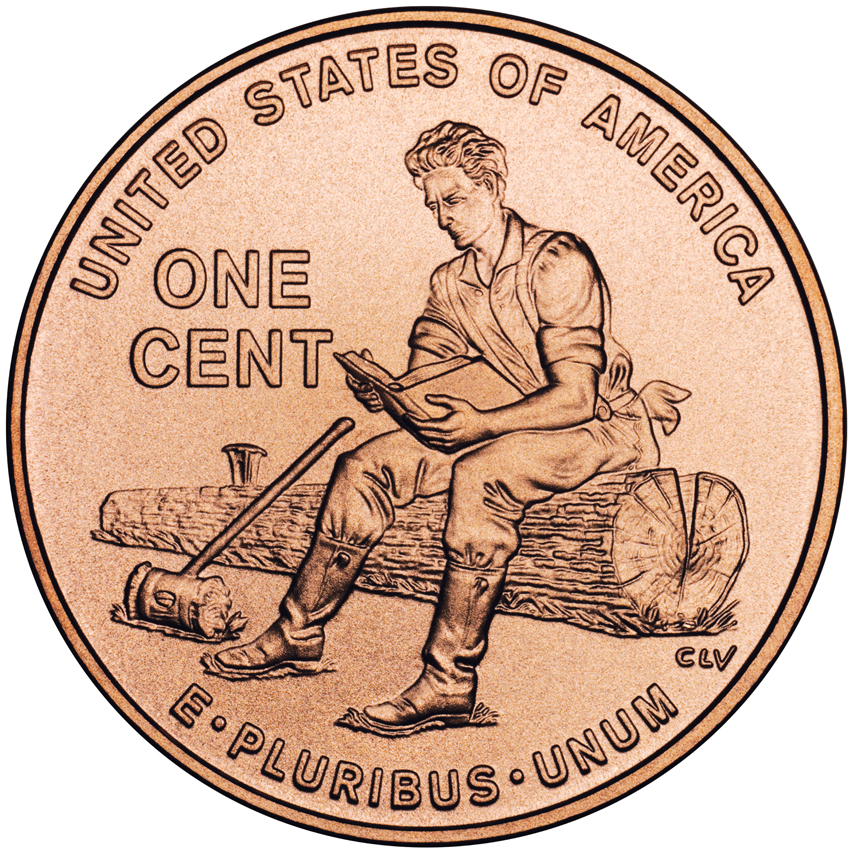
Four bicentennial reverses honoring Lincoln's life — circulation strikes are zinc, but the 95% copper collector versions are the ones to weigh and keep.
History
- Congress's Abraham Lincoln Bicentennial 1-Cent Coin Redesign Act called for the 2009 cent reverse to carry four different designs honoring the 200th anniversary of Lincoln's birth, each representing a major period of his life: birth and early childhood in Kentucky, formative years in Indiana, professional life in Illinois, and his presidency in Washington, D.C. (Congress.gov). The obverse continued to bear Brenner's likeness of Lincoln, and one design was issued at the start of each calendar quarter of 2009 (Congress.gov).
- The first design launched on February 12, 2009 — Lincoln's 200th birthday — with the remaining three following at roughly three-month intervals (CoinNews). The Act also required 1-cent coins in 2009 with the exact metallic content of the 1909 cent for numismatic purposes, which the Mint satisfied with 95% copper strikes for collectors (Congress.gov; CoinWeek).
- After the program ended, the reverse changed to the Union Shield design (U.S. Mint).
What is it worth
- Ordinary circulated examples are worth face value to a small premium; collector value concentrates in certified high-grade pieces, the 95% copper collector versions, and recognized doubled-die varieties — PCGS recognizes the eight Doubled Die Reverse varieties listed in the Cherrypickers' Guide (CoinWeek)
- Many 2009 cents were saved in uncirculated condition, so bright red uncirculated examples remain inexpensive (CoinWeek)
What drives the premium
- 95% copper satin-finish and proof collector versions — 3.11 g vs 2.5 g circulation strikes (CoinWeek).
- Collector value concentrates in certified high-grade pieces, the 95% copper collector versions, and recognized doubled-die varieties (CoinWeek)
- Philadelphia and Denver — eight design/mint combinations (Numismatic News)
How to identify the valuable variety
- There are four distinct reverses: a log cabin (Kentucky birth and childhood), a young Lincoln splitting rails (Indiana formative years), the young professional Lincoln before the Illinois State Capitol, and the half-finished U.S. Capitol dome (presidency) (CoinNews)
- The Formative Years reverse was designed by Charles Vickers, whose CLV initials appear at the bottom of the log (CoinWeek)
Specifications
- Composition: Copper-plated zinc at 2.5 g; collector versions 95% copper at 3.11 g (CoinWeek)
- Weight: 2.5 g (CoinWeek)
- Diameter: 19.05 mm (CoinWeek)
- Edge: Plain
- Alignment: Not verified in consulted references
- Designers: Obverse: Victor David Brenner; Formative Years reverse: Charles Vickers (CoinWeek)
- Mint: Philadelphia and Denver — eight design/mint combinations (Numismatic News)
Collector notes
- Circulation strikes are copper-plated zinc at 2.5 g; the satin-finish Mint Set and proof collector versions are 95% copper alloy at 3.11 g, so weight separates the two (CoinWeek)
Market check
Compare live listings for this coin on eBay:
Search eBay for 2009 Lincoln Bicentennial Cents
As an eBay Partner, The Coin Wiki may earn from qualifying purchases.
Related Coins
Live on eBay
Live asking prices — not sale records.
 2009 S Formative Years Lincoln Bicentennial Cent Proof Penny 1c Coin$3.99View on eBay
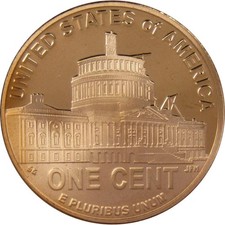 2009 S Presidency Lincoln Bicentennial Cent Proof Penny 1c Coin$3.99View on eBay
 2009 S Professional Life Lincoln Bicentennial Cent Proof Penny 1c Coin$3.99View on eBay
As an eBay Partner, The Coin Wiki may earn from qualifying purchases.
FREE DOWNLOAD
Before you spend that coin, check it.
The Pocket Change Key-Date Checklist covers the cents, nickels, dimes, quarters and halves still hiding in circulation — including the 1943 and 1983 errors worth five figures. One page to print, a lifetime of jars to check.