
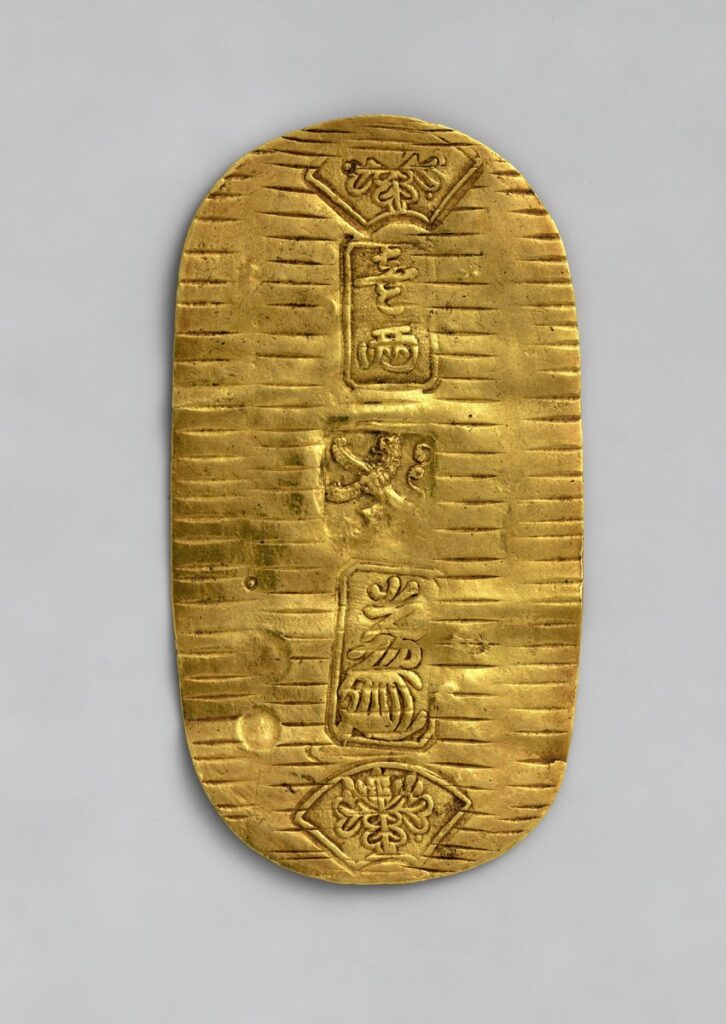
Before the yen, Japan’s money was hammered oval gold — koban and the larger oban — stamped with ink marks and punch seals. They are the most evocative coins in Japanese numismatics and six-figure auction staples. This entry covers what they are and the landmark sales.
Key facts
- Auction landmarks from the 2021 Pinnacle Collection sale in Hong Kong: a Sado-island-gold koban described among the “most desirable” types; Meireki-era oban $84,000; Keicho-era oban $102,000 (16,500+ minted, only example graded MS62); Tensho-era oban $156,000 and a Naga oban $348,000; Genroku-era oban $264,000 and $288,000 (Nasdaq/GOBankingRates roundup).
- Oban typically show hammer/ink marks from the assaying process; unusual arrangements (e.g., column-aligned marks) can add premiums (Nasdaq roundup).
Market check
As an eBay Partner, The Coin Wiki may earn from qualifying purchases.
FREE DOWNLOAD
Before you spend that coin, check it.
The Pocket Change Key-Date Checklist covers the cents, nickels, dimes, quarters and halves still hiding in circulation — including the 1943 and 1983 errors worth five figures. One page to print, a lifetime of jars to check.