
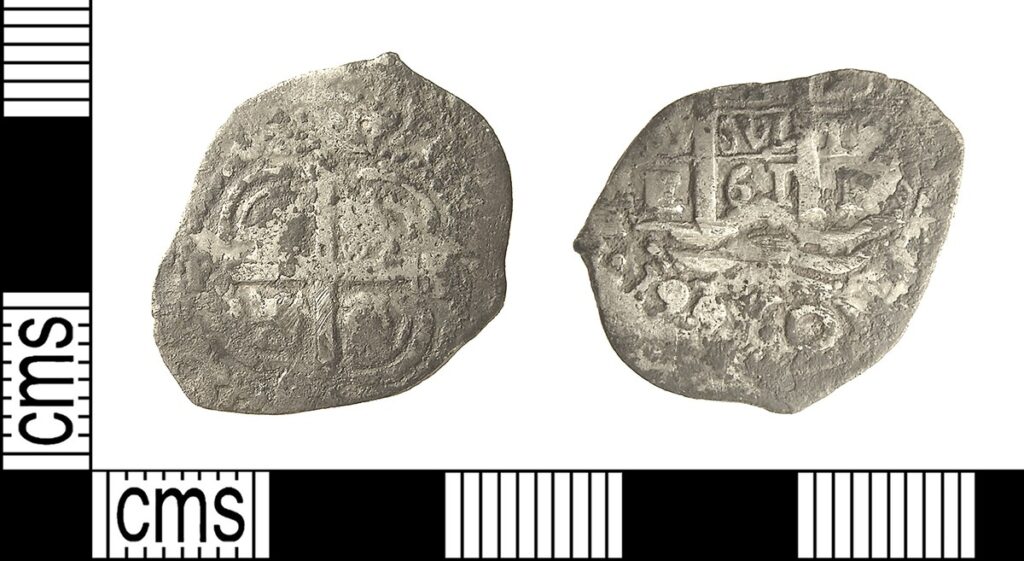
Hammer-struck "macuquinas" from Potosí — the crude, clipped silver cobs that were the first global currency and the colonial money of the Río de la Plata.
History
- "Macuquina" (cob) coins were hammer-struck in Spanish America from the 16th to the mid-18th century; the name likely comes from the Quechua macay pina ("hammer blows").
- The Potosí mint was founded in 1572 (proposal of Viceroy Francisco de Toledo); cob production there began the same year, and Potosí was the last mint to abandon cob technology, striking them until 1772.
- The two classic design sides: a cross with castles and lions, and the Pillars of Hercules over waves ("pillars and waves") — transitional types around 1652 blend both.
- Cobs were made by cutting silver bars to weight, so overweight pieces were simply clipped — diameter and weight vary piece to piece (8 reales examples: 26.65 g and 27.2 g) — and their appearance was crude because the coins were often melted on arrival in Spain.
- Potosí cobs were the first global currency, accepted in Asia, Europe, Africa and the Americas as the "peso de ocho reales" — pieces of eight.
- Regional tie: Potosí (Alto Perú, now Bolivia) lay within the Viceroyalty of the Río de la Plata; patriot armies occupied Potosí in 1810, 1813 and 1815, and the first patriotic coins were struck there in 1813 under the April 13, 1813 Assembly decree.
Key dates & varieties
- A famous specialist group: the "heart-shaped" Potosí cobs of the 17th–18th centuries, generally agreed to have had a religious (Sacred Heart) purpose and among the rarest Potosí issues.
Specifications
- Irregular by nature: 8 reales nominally about 27 g of silver; each piece was weighed and clipped individually, so no two match exactly.
Collector notes
- Crude strike is normal on cobs — buy the weight and the surfaces you see, not the sharpness of the design.
Market check
As an eBay Partner, The Coin Wiki may earn from qualifying purchases.
FREE DOWNLOAD
Before you spend that coin, check it.
The Pocket Change Key-Date Checklist covers the cents, nickels, dimes, quarters and halves still hiding in circulation — including the 1943 and 1983 errors worth five figures. One page to print, a lifetime of jars to check.